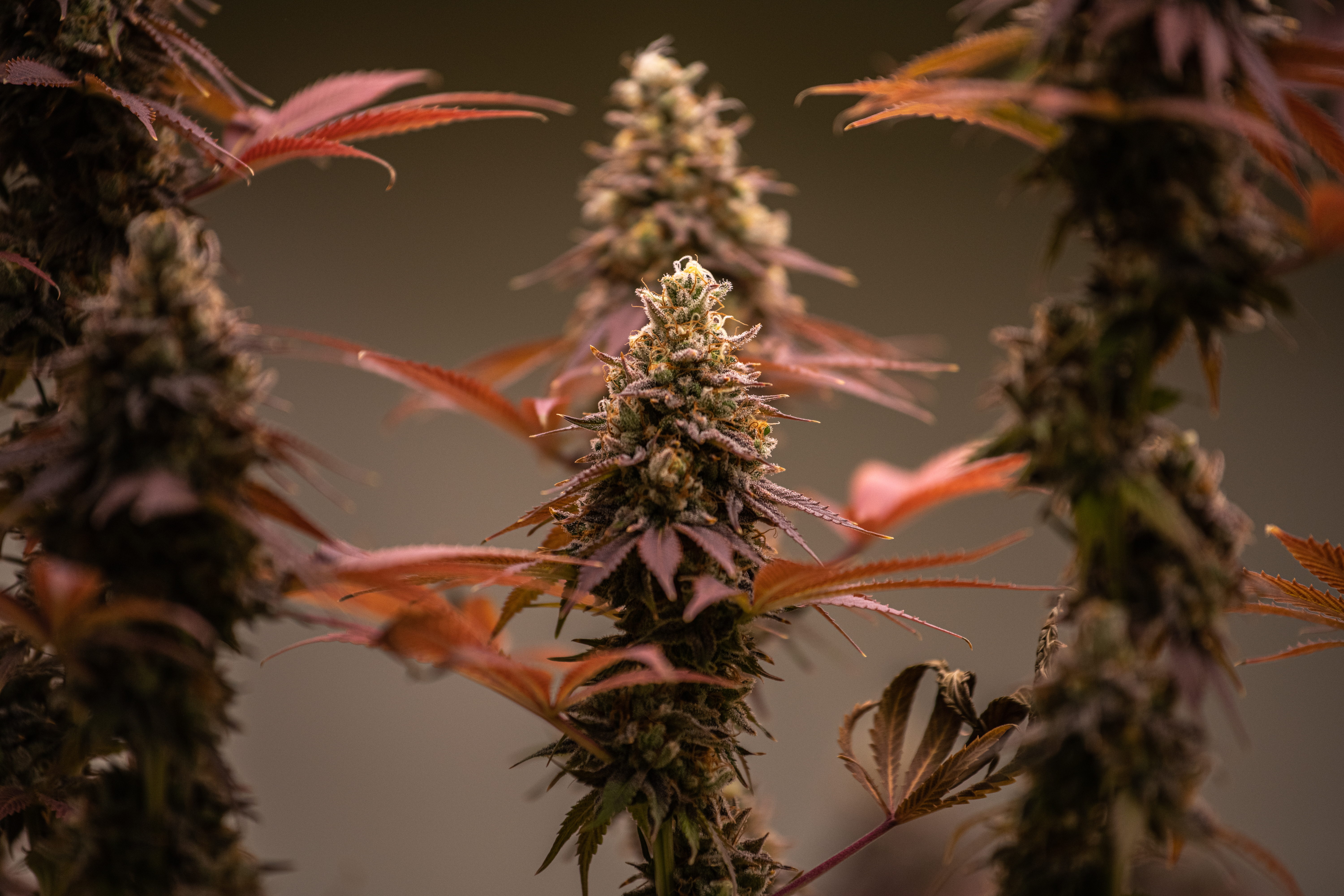


Critical Kush is a well-known cannabis strain that combines strong Kush qualities with the high production linked to Critical genetics. It is mainly an indica strain, although its exact genetic balance may differ between breeders. Most versions are described as having about 80 percent indica genetics and 20 percent sativa genetics. This balance gives the plant many traits that are often connected to indica varieties. These may include compact growth, broad leaves, dense flowers, and deeply relaxing effects.
The best-known version of Critical Kush comes from Critical Mass and OG Kush. Critical Mass is valued for its quick flowering period and ability to produce heavy harvests. OG Kush is known for its high THC levels, strong aroma, and relaxing effects. Crossing these two parent strains created a plant that may offer both strong potency and good yield potential. Some seed companies list the parents as Critical and OG Kush instead. Therefore, the exact characteristics of Critical Kush can change depending on the breeder and the seeds being grown.
Critical Kush has become popular among legal cannabis growers because of its manageable size and productive growth. Indoor plants often remain shorter than many sativa-dominant strains. Their side branches can develop several dense flowering sites. This shape can make the plants suitable for indoor rooms, tents, and other controlled spaces. Outdoor plants may grow larger when they receive enough sunlight, water, and root space.
The strain is also recognized for producing thick flowers with a heavy layer of resin. These flowers are often green and covered in small, crystal-like trichomes. Orange or brown pistils may appear between the swollen sections of the flower as it reaches maturity. Trichomes contain cannabinoids and aromatic compounds. Their presence helps explain why properly grown Critical Kush flowers may have a strong smell and high THC content.
THC is the main intoxicating compound found in cannabis. Critical Kush commonly contains a moderate to high amount of THC, but no single percentage applies to every product. Some seed companies report THC levels of about 20 percent. Tested flowers from other sources may contain lower or higher amounts. Genetics, plant health, light strength, harvest timing, drying, curing, and storage can all influence the final result. Consumers should check a product’s laboratory label when one is available instead of relying only on a general strain description.
The effects of Critical Kush are often described as calming, physically relaxing, and long-lasting. Some people may feel mental calm followed by a heavier sensation throughout the body. Larger amounts may cause sleepiness or make it difficult to remain active. These qualities are why the strain is commonly linked to evening or nighttime use. However, cannabis does not affect everyone in the same way. A person’s tolerance, body chemistry, dose, and consumption method can change the experience.
Critical Kush may be too strong for people who have little experience with THC. Consuming a large amount can cause unwanted effects such as dizziness, anxiety, dry mouth, red eyes, confusion, or an increased heart rate. THC can also reduce coordination, attention, and reaction speed. Anyone who uses Critical Kush should avoid driving, operating machinery, or completing tasks that require full awareness. Starting with a small amount may reduce the risk of an uncomfortable experience.
Aroma and flavor are also important parts of the strain’s identity. Critical Kush is commonly linked to earthy, woody, spicy, herbal, and pine-like notes. Some plants may also produce hints of citrus or sweetness. These qualities come from aromatic compounds called terpenes. Myrcene, caryophyllene, and limonene are often associated with Kush varieties, although the terpene profile can vary between individual plants. Growing conditions, harvest timing, drying, curing, and storage can also change the final aroma.
Legal growers often choose Critical Kush because it may finish flowering in about eight to ten weeks. Its branches can carry large, dense flowers under favorable conditions. Heavy flowers may need support to prevent the branches from bending or breaking. Indoor and outdoor yields depend on many factors, including light, temperature, humidity, nutrition, watering, plant training, root health, and grower skill. Breeder estimates can provide a useful target, but they should not be treated as guaranteed harvest amounts.
Dense flowers also require careful environmental control. High humidity and weak airflow can increase the risk of mold or bud rot. Growers need to inspect the canopy and flowers throughout the flowering stage. Proper spacing, air movement, and humidity control can help protect the crop. Careful drying and curing are equally important because poor handling after harvest may damage the aroma, potency, and safety of the flowers.
This guide will explain the main features of Critical Kush in clear detail. It will cover its genetics, parent strains, THC and CBD content, expected effects, appearance, aroma, flavor, flowering time, and yield. It will also explain how the plant grows indoors and outdoors, when it may be ready for harvest, and which problems growers may face. Safety, side effects, and responsible use will also be discussed.
Critical Kush is not a single, perfectly uniform product. Different breeders, plants, and growing environments may produce different results. Understanding these differences helps readers form realistic expectations. Local laws should always be checked before buying, possessing, using, or growing cannabis. Overall, Critical Kush is an indica-dominant strain known for potent flowers, relaxing effects, dense growth, and strong harvest potential when it is grown under suitable conditions.
What Is the Critical Kush Strain?
Critical Kush is a potent, indica-dominant cannabis strain known for its relaxing effects, dense flowers, and high yield potential. Most versions combine Critical or Critical Mass genetics with OG Kush. This genetic background gives the strain a mixture of productive growth and classic Kush qualities. It may develop quickly, remain at a manageable height, and produce heavy flowers covered in sticky resin.
The strain is mainly associated with physical relaxation and a calm mental state. These effects can become strong, especially when a product has a high THC level. For this reason, Critical Kush is often used during the evening rather than early in the day. However, its effects can vary based on the amount consumed, the person’s THC tolerance, and the chemical profile of the product.
The Basic Characteristics of Critical Kush
Critical Kush is usually described as having about 80 percent indica genetics and 20 percent sativa genetics. This ratio is not fixed because breeders may use different parent plants. Still, most Critical Kush plants show several common indica traits. They often grow with a short or medium height, thick stems, broad leaves, and closely spaced branches.
Mature plants may produce compact flowers that become heavy during the final weeks of flowering. The flowers are often light to medium green, although darker shades may appear. Orange or rust-colored pistils grow around the flowers. A mature plant may also develop a thick coating of resin-producing trichomes. These trichomes can make the flowers feel sticky and give them a frosted appearance.
Critical Kush usually has a strong and complex aroma. Earth, wood, herbs, pine, and spice are common descriptions. Certain plants may also produce sweet or citrus notes. The aroma can become strong while the plant is flowering, so legal indoor growers may need an odor-control system. Carbon filters and proper ventilation can help reduce the smell outside the growing area.
Why the Strain Is Called Critical Kush
The name reflects the two main sides of the strain’s genetic background. “Critical” refers to Critical or Critical Mass genetics. These plants are known for producing large amounts of flower within a fairly short growing period. Critical Mass received its name because its branches can become heavily loaded with flowers. Weak or unsupported branches may bend or break under this weight.
“Kush” refers to the OG Kush side of the strain. Kush strains have a long connection to cannabis from the Hindu Kush mountain region of Central and South Asia. Modern OG Kush has a more complex and debated history, but it is widely known for its potency, strong resin production, and earthy aroma.
Critical Kush brings these two sets of traits together. The Critical side may support plant vigor, fast flowering, and heavy yields. The OG Kush side may add potency, strong odors, resin, and relaxing effects. The result is a plant designed to offer both production and quality.
Is Critical Kush an Indica or Sativa?
Critical Kush is generally classified as an indica-dominant hybrid. It is not usually considered a pure indica because it may carry some sativa genetics. Its growth pattern and effects, however, often show stronger indica qualities.
Indica-dominant plants tend to grow shorter and wider than many sativa-dominant plants. Their leaves are often broad, and the spaces between their branches may be shorter. Critical Kush commonly follows this pattern. It can form a bushy canopy with several flowering sites when it receives suitable care.
The indica and sativa labels provide only a basic description. They cannot fully predict how a person will respond to a cannabis product. THC level, dose, terpene content, minor cannabinoids, personal tolerance, and consumption method may all affect the experience. Two Critical Kush products may also feel different if they came from separate breeders or were grown under different conditions.
What Makes Critical Kush Different?
Critical Kush stands out because it combines high potency with strong harvest potential. Some strains focus mainly on large yields but may have lower THC levels. Other strains produce very strong flowers but may be difficult to grow or offer smaller harvests. Critical Kush was developed to bring productive and potent traits into one plant.
Its flowering period is another important quality. Many versions may finish flowering within eight to ten weeks. This period is shorter than the flowering time of some sativa-dominant varieties. A shorter flowering stage may reduce the amount of time needed to maintain the crop. It can also help outdoor plants finish before wet or cold seasonal weather begins.
The plant’s manageable size may make it useful for indoor cultivation. Growers can often control its height through training, pruning, and a suitable vegetative period. Strong side branches can hold several flower sites. However, branches may need stakes, ties, or a support net when the flowers begin gaining weight.
Critical Kush also produces dense flowers. This feature can improve the final harvest weight, but it creates a possible problem. Thick flowers can trap moisture, especially when humidity is high and airflow is poor. Mold and bud rot may develop inside a flower before they become easy to see. Careful environmental control is therefore important during the later flowering stage.
Who May Be Interested in Critical Kush?
Legal growers may be interested in Critical Kush because it can produce substantial yields without becoming extremely tall. Its fairly short flowering time may also help growers complete harvests more quickly. It can be grown indoors, outdoors, or in a greenhouse when local laws allow cultivation.
Experienced cannabis consumers may research Critical Kush because of its high THC content and relaxing effects. People with a low THC tolerance need to be more careful. A small amount may produce strong effects, while a larger amount may lead to heavy sedation, anxiety, or poor coordination.
Some people look for Critical Kush because they want cannabis that may help them relax at the end of the day. Others may be interested in its earthy Kush flavor or resin production. Reports about comfort, sleep, or stress should not be treated as proof that the strain can treat a health condition. Anyone considering cannabis for medical reasons should speak with a qualified health professional.
Critical Kush is an indica-dominant hybrid that combines Critical or Critical Mass with OG Kush genetics. It is known for compact growth, dense resinous flowers, high THC potential, strong aromas, and relaxing effects. The Critical side supports fast growth and large harvests, while the OG Kush side adds potency, resin, and earthy flavors. Its manageable height and eight-to-ten-week flowering period may appeal to legal indoor and outdoor growers. However, its dense flowers require good airflow and humidity control. Strain characteristics can vary, so breeder information and laboratory results provide the best details about a specific Critical Kush plant or product.
Critical Kush Genetics and Parent Strains
Critical Kush is best known as a cross between Critical Mass and OG Kush. However, some breeders describe their version as a cross between Critical and OG Kush. This difference matters because cannabis plants sold under the same strain name may not have exactly the same genetic background. A grower should check the breeder’s information before making decisions about plant height, flowering time, THC content, and expected yield.
Most Critical Kush plants are indica-dominant. A common estimate is 80 percent indica and 20 percent sativa. This genetic balance helps explain the plant’s short and bushy shape, broad leaves, dense flowers, and relaxing effects. The Critical side contributes productive growth, while the OG Kush side adds potency, resin, and a strong earthy aroma.
The Critical Mass Parent
Critical Mass is a well-known indica-dominant strain. It was created from Afghani and Skunk #1 genetics. Both parent lines have played an important role in the development of many modern cannabis strains.
Afghani strains come from cannabis plants connected to Afghanistan and the nearby Hindu Kush region. These plants developed in areas with difficult weather and a shorter growing season. They are often short, strong, and quick to flower. Many Afghani plants also produce large amounts of resin. That resin may have helped protect flowers from dry air, pests, and changing temperatures.
Skunk #1 is a famous hybrid that has been used in many breeding projects. It is known for strong growth, a clear growth pattern, and a powerful smell. Skunk genetics may also help produce larger harvests and stable plants. Stability means that several plants grown from the same seed line may show similar traits.
Critical Mass was developed to produce very heavy flowers. The name refers to the large amount of weight that may collect on its branches. Mature flowers can become so heavy that weak branches bend or break. This trait explains why Critical Mass is often linked to high yields. It also shows why growers may need to support plants during flowering.
The Critical Mass parent may give Critical Kush a fast flowering time and strong side branches. It may also support the growth of large flower clusters. These qualities make Critical Kush attractive to legal growers who want to use their available space well. However, heavy and dense flowers can create risks. Moisture may become trapped inside them, which can lead to mold or bud rot if humidity remains too high.
The OG Kush Parent
OG Kush is one of the most recognized names in modern cannabis. Its exact early history is still debated, but it has been used to create many popular hybrids. OG Kush is known for its strong THC potential, heavy resin production, and sharp aroma.
The flowers of OG Kush often carry earthy, pine, fuel, citrus, and spicy notes. Critical Kush may inherit several of these qualities. Different plants can produce different aroma patterns because terpene levels are affected by genetics and the growing environment.
OG Kush may also contribute to the effects of Critical Kush. It is commonly linked to a strong sense of relaxation that can affect both the mind and body. Critical Kush often shows a similar pattern. A small amount may create calmness, while a larger amount may cause physical heaviness or sleepiness. Personal tolerance, dose, and product strength will influence the final experience.
The OG Kush parent can also add thick trichome coverage. Trichomes are small structures that form on cannabis flowers and nearby leaves. They produce cannabinoids and terpenes. A high number of trichomes can make mature Critical Kush flowers appear pale, shiny, or frosted.
How the Parent Strains Work Together
Critical Kush combines two different sets of useful traits. Critical Mass may provide speed, vigor, and yield. OG Kush may provide potency, resin, aroma, and strong indica effects. The goal of the cross is to create a plant that produces a large harvest without losing the qualities expected from a Kush strain.
The plant usually grows in a compact form. Its main stem and side branches may become thick enough to support several flowering sites. Broad leaves can create a dense canopy. Growers may need to remove a small amount of unnecessary growth to improve airflow and light exposure. Too much removal can stress the plant, so changes should be made carefully.
Critical Kush may stretch after the flowering stage begins, but it does not usually stretch as much as a tall sativa strain. This limited stretch can make height easier to control indoors. However, each plant may behave differently. Some plants may remain short, while others may grow taller or develop longer spaces between branches.
Why Different Critical Kush Plants May Vary
Cannabis seeds are not always exact copies of one another. Each seed receives a mixture of genes from its parent plants. This natural variation can lead to different phenotypes. A phenotype is the set of visible and measurable traits shown by an individual plant.
One Critical Kush phenotype may grow short and produce wide flowers. Another may grow taller and develop more side branches. Some plants may smell strongly of earth and pine, while others may carry more citrus, spice, or fuel notes. THC content, flowering time, and final yield can also vary.
The growing environment has a major effect on how genetics are expressed. Light, temperature, humidity, root space, nutrition, watering, and plant health all influence development. Strong genetics cannot guarantee a large harvest if the plant receives poor care. Good growing conditions also cannot completely change the limits set by genetics.
Breeder selection creates another source of variation. One breeder may choose parent plants for high THC levels. Another may focus on fast flowering, disease resistance, or large yields. Both versions may be sold as Critical Kush, but they may not perform in exactly the same way.
Clones can provide more consistent plants because they are cut from one parent plant. A clone carries the same basic genetic information as that parent. However, clones may still grow differently when they receive different care or face different environmental conditions.
Indica and Sativa Traits in Critical Kush
Critical Kush is usually described as indica-dominant because its structure and effects often match common indica traits. It tends to grow wide rather than extremely tall. Its leaves are often broad, and its flowers may become dense. Its effects are also commonly linked to physical calm and sleepiness.
The terms indica and sativa do not fully explain a strain’s chemical content. They are useful for describing general growth patterns, but they cannot guarantee a certain effect. THC, CBD, minor cannabinoids, terpenes, dose, and personal sensitivity all affect the experience.
A laboratory report gives more useful details about a finished cannabis product. It may show THC, CBD, and terpene levels. Breeder information is helpful for growers, but laboratory results are better for understanding the strength of a specific harvested product.
Critical Kush is commonly produced by crossing Critical Mass or Critical with OG Kush. Critical Mass may contribute fast flowering, strong growth, and heavy yields. OG Kush may add high THC potential, thick resin, earthy aromas, and deeply relaxing effects. Together, these genetics often create a compact, indica-dominant plant with dense flowers and a flowering time of about eight to ten weeks. Individual plants may still differ because of phenotype variation, breeder selection, and growing conditions. Checking the exact breeder description is the best way to understand the likely traits of a specific Critical Kush seed line.
Critical Kush THC, CBD, and Potency
Critical Kush is known as a potent cannabis strain with a moderate to high level of THC. Many breeder descriptions place its THC content near 20 percent. However, this number is only a general estimate. A finished Critical Kush product may test lower or higher because genetics, cultivation, harvest timing, and storage can all affect its chemical content.
THC is the main compound that causes the intoxicating effects of cannabis. A higher THC level does not always guarantee a better product. It mainly means that a smaller amount may create stronger effects. Critical Kush may feel very powerful to someone with a low tolerance, even when the laboratory result is below the highest levels found in other strains.
How Much THC Does Critical Kush Have?
Critical Kush commonly has a THC level between about 18 and 25 percent. Some seed companies describe their plants as producing around 20 percent THC. Commercial products may have different results. One flower sample could test at 18 percent, while another product with the same strain name might test above 20 percent.
Several factors explain these differences. The breeder may have used different Critical or OG Kush parent plants. Each seed can also produce a different phenotype. One phenotype may naturally produce more THC than another. A clone may offer greater genetic consistency, but its THC level can still change based on plant health and the growing environment.
The number shown on a cannabis label usually refers to the amount of THC or potential total THC in a tested sample. Testing rules and label formats can vary between legal markets. Some labels list delta-9 THC and THCA separately. Others provide a total THC figure that estimates how much THC may become available after heating.
THCA is the natural form found in fresh and dried cannabis flowers. Heat changes THCA into THC through a process called decarboxylation. Smoking, vaping, or cooking cannabis causes this change. That is why a label may show a low amount of active THC but a much larger amount of THCA.
What Makes Critical Kush Feel Strong?
Potency involves more than a single THC percentage. The amount consumed is one of the most important factors. A small dose of a 20 percent THC product may create milder effects than a large dose of a product containing 15 percent THC. Consumption method also changes how quickly the effects begin and how long they last.
Smoking or vaping usually produces effects within a short period. This quicker onset can make it easier to notice when enough has been consumed. Edible products may take much longer to produce clear effects. A person may wait 30 minutes to two hours or longer, depending on the dose, food intake, and digestive system. Eating more before the first amount has taken effect can lead to an uncomfortable experience.
Personal tolerance also affects strength. Frequent cannabis consumers may need more THC to feel the same effects that a new consumer feels from a small amount. Tolerance does not remove all risks. A high dose can still reduce coordination, slow reaction time, and affect judgment.
Critical Kush is also associated with strong physical relaxation. This heavy body sensation may make its effects feel more intense than those of a strain that produces a lighter or more active experience. Some people may become very sleepy after consuming it. Others may feel calm without becoming fully tired. These differences show why strain descriptions cannot predict every person’s response.
What Is the CBD Content of Critical Kush?
Critical Kush generally contains much less CBD than THC. Some breeder descriptions report a moderate level of CBD, but finished products may contain only a small amount. Laboratory testing is the only reliable way to know the CBD content of a specific product.
CBD is a cannabis compound that does not produce the same intoxicating effects as THC. It interacts with the body differently and may influence how some people experience cannabis. However, a small amount of CBD does not cancel the effects of a large amount of THC.
Claims that Critical Kush has a perfect balance of THC and CBD should be treated carefully. Different products may have very different ratios. One sample might contain 20 percent THC and less than 1 percent CBD. Another phenotype may produce more CBD. Consumers should read the laboratory label instead of relying only on the strain name.
Other Cannabinoids in Critical Kush
Cannabis plants can produce many cannabinoids besides THC and CBD. These may include CBG, CBC, and small amounts of other compounds. Their levels are usually much lower than the main cannabinoid.
CBG begins as an early chemical form that the plant uses to create other cannabinoids. Small amounts may remain in the mature flowers. Certain product labels may list CBG if the amount is high enough to measure. Research on minor cannabinoids is still developing, so broad health claims should be avoided.
The full chemical profile may help explain why two cannabis products with similar THC levels can feel different. Terpenes, minor cannabinoids, dose, and personal sensitivity may all shape the experience. THC remains the main intoxicating compound, but it is not the only part of the plant.
Factors That Influence Final THC Levels
Genetics set the possible THC range, but the growing environment affects whether a plant reaches that potential. Light is especially important because cannabis plants use energy from light to support growth and flower production. Weak light may lead to smaller flowers and lower cannabinoid production.
Plant health also matters. Severe nutrient problems, pests, disease, overwatering, or heat stress can reduce flower quality. Giving too many nutrients will not force a plant to produce more THC. Excess fertilizer may damage roots and leaves, which can slow growth.
Harvest timing has a strong effect on the final product. Harvesting too early may reduce yield and cannabinoid development. Waiting too long may also change the chemical profile. Growers often inspect trichomes with a magnifying tool to judge maturity rather than relying only on the color of the pistils.
Drying and curing do not create extra THC, but careful handling can protect the cannabinoids already present. Strong heat, bright light, oxygen, and poor storage can slowly damage THC. Dried flowers should be stored in a cool, dark place inside a suitable airtight container. Moldy cannabis should not be consumed.
Is Critical Kush Suitable for Beginners?
Critical Kush may not be the easiest choice for a new cannabis consumer because it can contain a high amount of THC. A beginner may experience strong relaxation, sleepiness, dizziness, or anxiety after consuming too much. A small starting amount and a slow pace may reduce these risks.
People should wait long enough to understand the effects before consuming more. Extra caution is needed with edible products because the onset can be delayed. Mixing cannabis with alcohol or other substances may increase impairment and unwanted effects.
THC affects attention, memory, judgment, and coordination. A person should not drive, operate machinery, or complete dangerous tasks after using Critical Kush. Safe use also includes keeping all cannabis products away from children and pets.
Critical Kush commonly contains about 18 to 25 percent THC, although no single level applies to every plant or product. Its indica-dominant effects and strong physical relaxation may make it feel especially potent. CBD is usually present at a much lower level, but the exact amount depends on the breeder and phenotype. Genetics, plant health, lighting, harvest timing, drying, and storage can all influence the final cannabinoid profile. Laboratory results provide better information than a strain name or breeder estimate. New consumers should approach Critical Kush carefully because even a small amount may produce strong and long-lasting effects.
Critical Kush Effects and Typical Experience
Critical Kush is widely known for producing strong relaxing effects. Its indica-dominant genetics and high THC content may create a heavy feeling in the body and a calmer mental state. These effects often make the strain more suitable for evening or nighttime use. However, each person may respond differently based on dose, tolerance, body chemistry, and consumption method.
The experience may begin with a change in mood or mental activity. Physical relaxation often follows. Larger amounts may lead to sleepiness, reduced motivation, or a strong desire to remain seated. Critical Kush can also affect memory, attention, reaction time, and coordination. Understanding these possible effects can help consumers make safer choices.
How the Effects May Begin
Smoking or vaping Critical Kush may produce noticeable effects within a few minutes. Some people may first notice a calm or peaceful mental state. Thoughts may seem slower, and outside concerns may feel less demanding. A mild sense of happiness or contentment may also appear.
Physical effects may begin soon after the mental changes. The shoulders, arms, legs, and other muscle groups may feel less tense. The body can start to feel warm, loose, or heavy. This feeling may become stronger as time passes.
The early experience depends on the amount used. A small amount may provide mild relaxation while allowing the person to remain awake and aware. A larger amount can produce more intense intoxication. Strong doses may make movement feel slower and simple tasks more difficult.
Edible products create a different timeline. Their effects may take 30 minutes to two hours or longer to appear. The experience may also last several hours. A person should not take another dose simply because the first one has not produced immediate effects. Waiting long enough can help prevent accidental overconsumption.
Mental and Emotional Effects
Critical Kush may produce a calm mental state. Some consumers may feel less interested in active tasks or demanding conversations. The mind may become quieter, which is one reason the strain is often connected with the end of the day.
A positive mood may develop alongside this calmness. Some people may feel cheerful, peaceful, or more comfortable with their surroundings. These reactions are not guaranteed. THC can affect the same person differently on separate occasions.
Higher doses may make it harder to focus or follow complex ideas. Short-term memory may also become weaker. A person might forget what was just said or lose track of a task. These changes can make Critical Kush a poor choice before work, study, driving, or any activity that requires close attention.
THC may cause anxiety, worry, or suspicious thoughts in some people. This risk may be greater for new consumers or those who use a large amount. A quiet and familiar setting may help reduce discomfort, but it cannot guarantee a positive experience.
Physical Effects and Body Relaxation
Physical relaxation is one of the main effects linked to Critical Kush. The body may feel loose, heavy, or less active. This effect can start gently and become stronger over time.
Some people use the term “couch lock” to describe a heavy cannabis experience. It refers to feeling so relaxed that getting up or moving seems difficult. Critical Kush may create this effect when consumed in a high dose. A person who wants to remain active should be careful with the amount used.
Sleepiness may also occur. This effect is one reason many people connect Critical Kush with nighttime use. However, feeling sleepy after cannabis use does not mean the strain treats insomnia. Sleep responses vary, and regular THC use may affect sleep patterns in complex ways.
Other physical effects can include dry mouth and red eyes. These are common reactions to THC. Drinking water may help with dry mouth, but it does not reduce intoxication. Eye drops designed for red eyes may offer comfort, although they do not change the mental effects.
Some people may feel hungry after consuming Critical Kush. THC can influence signals connected to appetite. The strength of this effect differs between individuals. Others may feel dizzy, especially when standing up quickly.
How Long the Effects May Last
The duration of the experience depends on the consumption method, dose, tolerance, and individual metabolism. Smoked or vaped cannabis may produce effects for two to four hours. Some changes in attention or coordination may last longer.
Edible cannabis may produce effects for six hours or more. Strong doses can last much longer than expected. The delayed onset makes edible products harder to measure, especially for beginners.
A person should allow enough time before driving or completing an important task. Feeling less intoxicated does not always mean reaction time and judgment have fully returned to normal. Planning a safe setting and avoiding travel can reduce risk.
Frequent cannabis use can build tolerance. This means that a person may need a larger amount to feel the same effects. Tolerance can decrease after a break, so returning to an old dose may produce a stronger response than expected.
Factors That Change the Critical Kush Experience
THC level is important, but it is not the only factor that shapes the experience. A product containing 20 percent THC may feel mild at a small dose and overwhelming at a large dose. The amount consumed must always be considered along with the percentage.
Terpenes may also influence the aroma and overall character of the strain. Critical Kush is often associated with myrcene, caryophyllene, and limonene. The exact terpene levels vary between products. Research has not established a guaranteed effect for every terpene and strain combination.
Personal health, mood, and surroundings may change the response. Someone who is already anxious may be more likely to have an uncomfortable experience. A crowded or unfamiliar place may also increase stress.
Mixing cannabis with alcohol can increase dizziness, poor judgment, and loss of coordination. Other medicines may also interact with cannabis. Anyone taking prescription drugs should speak with a qualified health professional before using THC products.
Is Critical Kush Better for Daytime or Nighttime?
Critical Kush is generally considered more suitable for evening or nighttime use. Its strong body effects may reduce energy and make active work more difficult. Sleepiness may develop as the experience becomes stronger.
A low dose may feel less sedating for some experienced consumers. However, there is no guarantee that a small amount will support normal daytime function. Product strength and personal sensitivity can change the result.
Work, driving, childcare, cooking over an open flame, and operating tools require full attention. Critical Kush should not be used before these activities. A safe plan should include a calm setting, enough time for the effects to pass, and no need to drive.
Managing an Uncomfortable Experience
Consuming too much Critical Kush may cause anxiety, confusion, panic, nausea, or a racing heart. Moving to a quiet place may help reduce outside stress. Slow breathing and reassurance can also make the experience easier to manage.
The person should avoid consuming more cannabis, alcohol, or other substances. Water and a light snack may provide comfort, but they will not instantly remove THC from the body. Time is usually needed for the effects to decrease.
Severe symptoms require medical attention. Chest pain, trouble breathing, loss of consciousness, extreme confusion, or dangerous behavior should not be ignored. Emergency workers should receive clear information about what was consumed.
Critical Kush commonly produces mental calm, physical relaxation, heaviness, and sleepiness. Its effects may begin within minutes when smoked or vaped, while edible products may take much longer. Dose, THC level, tolerance, consumption method, mood, and setting can all change the experience. Higher amounts may impair memory, attention, judgment, and coordination. They may also cause anxiety or strong sedation. Critical Kush is generally linked to evening use because its relaxing effects may interfere with daytime tasks. Responsible use includes starting with a small amount, waiting before taking more, avoiding alcohol, and never driving while impaired.
Critical Kush Flavor, Aroma, Terpenes, and Appearance
Critical Kush is known for a strong aroma that reflects both sides of its genetic background. The Critical parent may add sweet, earthy, and herbal notes. OG Kush may add pine, spice, citrus, and a fuel-like scent. Together, these qualities can create a deep aroma that becomes stronger when the flowers are broken apart.
The exact smell, flavor, and appearance may change from one plant to another. Genetics create the basic range of possible traits, but the growing environment also matters. Light, plant health, harvest timing, drying, curing, and storage can affect the final quality of the flowers. One Critical Kush product may smell strongly of earth and pine, while another may have more citrus or spicy notes.
What Does Critical Kush Smell Like?
Earth is one of the most common aromas linked to Critical Kush. This scent may remind some people of fresh soil, wood, or a damp forest floor. Pine and herbal notes can make the aroma feel sharper and fresher. Spicy qualities may also appear, especially after the flowers are ground.
Some Critical Kush plants produce a mild citrus scent. This note may smell like lemon or orange peel. Other plants may carry hints of fuel or skunk. These stronger odors are often linked to the OG Kush side of the strain.
The smell may become very strong during the flowering stage. Flowers produce more aromatic compounds as they develop. The odor can spread outside an indoor growing space if it is not controlled. Legal indoor growers may use ventilation and carbon filters to manage the smell. Good airflow also helps reduce trapped moisture around dense flowers.
Fresh cannabis flowers do not smell exactly like dried and cured flowers. Fresh plants may have a greener scent that is similar to grass, leaves, or herbs. Slow drying and proper curing allow the deeper aroma to become clearer. Drying too quickly may leave the flowers with a weak or harsh smell.
What Does Critical Kush Taste Like?
The flavor of Critical Kush often follows its aroma. Earthy, woody, pine-like, and spicy tastes are commonly reported. Some products may also have sweet, herbal, citrus, or fuel-like qualities.
Flavor can change based on the method of consumption. Burning cannabis creates smoke and breaks down many chemical compounds through heat. Vaping dried flowers at a controlled temperature may keep more of the natural aroma, although inhaling any heated substance can still affect the lungs.
Poor growing and storage conditions may damage the flavor. Flowers exposed to high heat or bright light can lose aromatic compounds. Cannabis that is too dry may taste harsh and lose much of its smell. Flowers stored with too much moisture can develop mold and should not be consumed.
The taste of a strain does not prove its potency. A strong flavor does not always mean the flowers contain a high level of THC. A mild-smelling product may still be potent. Laboratory testing is a more reliable way to understand cannabinoid strength.
Terpenes Associated With Critical Kush
Terpenes are aromatic compounds produced by many plants. They are responsible for the smell of flowers, fruits, herbs, and trees. Cannabis plants create many types of terpenes in their trichomes.
Critical Kush is often associated with myrcene, caryophyllene, and limonene. The exact terpene profile depends on the breeder, phenotype, and growing conditions. Not every Critical Kush plant will contain the same terpenes in the same amounts.
Myrcene has an earthy, herbal, and slightly sweet aroma. It is also found in plants such as hops, mangoes, and thyme. A high level of myrcene may help explain some of the deep earthy notes found in Critical Kush.
Caryophyllene has a peppery and spicy scent. It is found in black pepper, cloves, and other spices. This terpene may contribute to the sharp or warm quality that appears when Critical Kush flowers are ground.
Limonene has a bright citrus aroma. It is found in the peels of lemons, oranges, and other citrus fruits. Critical Kush products with a clear lemon-like note may contain a measurable amount of limonene.
Other terpenes may also be present. Pinene may add a fresh pine smell. Humulene can contribute earthy or woody qualities. Linalool may provide a softer floral note. Only a laboratory report can confirm which terpenes are present in a specific sample.
Terpene claims should be treated carefully. A terpene may be linked to certain effects in early research, but the amount in a cannabis product can vary. Aroma alone cannot prove that a product will produce a certain physical or mental effect.
What Do Critical Kush Flowers Look Like?
Critical Kush often produces dense, compact flowers. Their shape may be round, thick, or slightly pointed. The Critical Mass parent may support the growth of large flower clusters, while OG Kush may add a tighter structure and heavy trichome coverage.
The flowers are usually light to medium green. Some plants may develop darker green or purple areas, depending on their genetics and growing conditions. Cooler temperatures can sometimes bring out purple pigments, but cold conditions should not be used if they may harm the plant.
Orange, amber, or brown pistils may twist through the flowers. Pistils are the small hair-like parts that first appear white during early flowering. They often darken as the plant matures. Pistil color can help show development, but it should not be the only guide used to choose harvest time.
Sugar leaves may extend from the flower clusters. These small leaves often carry visible trichomes. Growers usually trim many of them after harvest, although some may remain on the finished flowers.
Trichomes and Resin Production
Critical Kush is known for producing resinous flowers. The resin comes from trichomes, which are small structures found on the surface of the flowers and nearby leaves. Under magnification, mature trichomes may look like tiny stalks with round heads.
Trichomes produce cannabinoids such as THC and CBD. They also produce terpenes that give the strain its smell and flavor. A thick layer of trichomes can make the flowers look white, shiny, or frosted.
Trichome coverage can provide useful information about resin production, but appearance alone cannot measure potency. Two flowers may look equally frosted while containing different amounts of THC. Laboratory testing is needed for an accurate cannabinoid result.
Trichomes are delicate. Rough handling can break them away from the flowers. Heat, light, oxygen, and poor storage can also damage cannabinoids and terpenes over time. Careful drying, curing, handling, and storage can help protect the flower’s quality.
How Growing and Curing Affect Quality
Healthy plants have a better chance of producing strong aromas and attractive flowers. Good lighting gives the plant energy for growth and flower development. Balanced nutrition supports plant health, but excess fertilizer may create harsh flowers or damage the roots.
Harvest timing also affects the final product. Flowers harvested too early may have weak aromas and limited resin development. Flowers left too long may lose some of their freshness. Growers often examine trichomes under magnification to judge maturity.
Drying should remove moisture slowly and evenly. Flowers that dry too quickly may lose aroma and develop a rough taste. Flowers that dry too slowly in humid air may develop mold. Curing the dried flowers in suitable containers allows moisture to become more even and may improve the aroma.
Critical Kush commonly has earthy, woody, pine, spicy, herbal, citrus, and fuel-like qualities. Myrcene, caryophyllene, and limonene are often linked to its aroma, but the exact terpene profile varies. Mature flowers are usually dense, green, and covered with orange pistils and resin-producing trichomes. Genetics, plant health, harvest timing, drying, curing, and storage all affect the final smell, flavor, and appearance. Strong aroma and visible resin do not prove high potency, so laboratory testing remains the most reliable way to understand a specific Critical Kush product.
Possible Benefits, Side Effects, and Safety
Critical Kush is often researched because of its strong relaxing and sedating effects. Some consumers report using indica-dominant cannabis strains when they want to relax, sleep, increase appetite, or manage discomfort. However, these reports do not prove that Critical Kush can treat or cure a medical condition.
The strain may contain a high level of THC, which also means that it can cause strong unwanted effects. A person’s response depends on the dose, tolerance, health, age, consumption method, and other substances being used. Responsible use requires a clear understanding of both the possible effects and the risks.
Possible Reasons People Use Critical Kush
Some people choose Critical Kush because its effects may help them feel calm after a demanding day. The strain is commonly linked to a slower mental state and deep physical relaxation. These qualities may make it more appealing during the evening than during active daytime hours.
Sleep is another common reason people research Critical Kush. Its high THC content and indica-dominant effects may cause sleepiness. However, becoming sleepy after using cannabis does not mean that the strain treats insomnia. THC can affect sleep quality and sleep patterns in different ways. Frequent use may also lead to tolerance, which can reduce the effects over time.
Some consumers report using cannabis for temporary relief from discomfort. Critical Kush may create body heaviness that changes how a person notices physical sensations. This effect should not replace medical care or hide a serious health problem. Ongoing or severe pain needs a proper medical assessment.
THC may also increase appetite. A person may feel hungry after consuming Critical Kush, even after eating recently. Appetite changes can vary widely, and some people may not notice this effect.
Stress and low mood are other common reasons people consider cannabis. Critical Kush may create short-term calm or a positive change in mood. It can also increase anxiety, worry, or sadness in some people. Cannabis is not a guaranteed treatment for stress, anxiety, or depression. Anyone with ongoing mental health symptoms should speak with a qualified health professional.
Common Side Effects
Dry mouth is one of the most common side effects of THC. The mouth may feel sticky or uncomfortable. Drinking water may offer relief, but it will not reduce intoxication. Sugary drinks and alcohol may make dehydration or poor judgment worse.
Red eyes may also develop. THC can affect blood vessels in the eyes, making them appear more visible. This effect is usually temporary. Eye discomfort that continues after the cannabis effects have passed may require medical advice.
Dizziness can occur, especially after standing quickly. Sitting or lying down in a safe place may help prevent a fall. People who already have blood pressure problems should be careful because cannabis may affect heart rate and circulation.
Critical Kush may also cause sleepiness and poor coordination. The body may feel very heavy, and movement may become slower. These effects can raise the risk of falls, burns, cuts, or other injuries. Cooking over an open flame, climbing stairs, using tools, and operating machinery can become dangerous.
Short-term memory and attention may be affected. A person may lose track of a conversation or forget part of a task. Judgment and reaction time may also become weaker. Driving after using Critical Kush is unsafe and may be illegal.
Effects of Consuming Too Much
A high dose of Critical Kush can produce an uncomfortable and intense experience. Possible reactions include panic, confusion, nausea, vomiting, shaking, paranoia, or a rapid heart rate. Time may seem to move slowly, which can make the experience feel longer than it is.
Edible cannabis can create a greater risk of accidental overconsumption. Its effects may take two hours or longer to appear. A person who takes another dose too soon may later experience the effects of both doses at once. Edible effects can also last much longer than the effects of smoking or vaping.
A calm and quiet setting may help a person who has consumed too much. Slow breathing, water, and reassurance may provide comfort. The person should avoid taking more cannabis, alcohol, or other drugs.
Medical help is needed when symptoms become severe. Chest pain, trouble breathing, seizures, loss of consciousness, extreme confusion, or dangerous behavior should be treated as an emergency. Medical workers need accurate information about the product, amount, and time of use.
Mental Health Considerations
High-THC cannabis can increase anxiety in some people. Critical Kush may feel calming at one dose but overwhelming at a higher dose. People who are sensitive to THC may experience fear, racing thoughts, or suspicious feelings.
Cannabis may also raise the risk of serious mental health problems for certain people. This concern is greater for people with a personal or family history of psychosis or schizophrenia. High-THC products and frequent use may increase the risk.
People who have panic attacks, severe anxiety, bipolar disorder, or other mental health conditions should speak with a qualified professional before using cannabis. Cannabis may also interact with medicines used for mental health conditions. Stopping prescribed medicine without medical advice can be dangerous.
Mixing Critical Kush With Other Substances
Combining Critical Kush with alcohol can increase dizziness, nausea, poor judgment, and loss of coordination. The combined effects may be stronger than expected. This can increase the risk of accidents and injuries.
Cannabis may also interact with prescription and nonprescription medicines. Possible concerns include sedatives, sleep medicines, blood thinners, seizure medicines, and drugs that affect the heart or nervous system. A doctor or pharmacist can check for known interactions.
Using several cannabis products at the same time can also lead to a higher dose than planned. A person may smoke Critical Kush and then consume an edible without understanding the total amount of THC. Product labels should be read carefully.
Who Should Avoid Critical Kush?
Pregnant and breastfeeding individuals should avoid cannabis unless a qualified health professional gives specific medical advice. THC can reach a developing baby and may pass into breast milk.
Children and teenagers face higher risks because the brain continues developing into early adulthood. Cannabis products should be stored where children and pets cannot see or reach them. Edibles may look like normal candy, cookies, or drinks, which increases the risk of accidental use.
Older adults may also need extra caution. THC can cause dizziness, confusion, and poor balance, which may increase the chance of falling. Medicine interactions may be more likely if a person takes several prescriptions.
People with heart conditions should seek medical guidance because THC can change heart rate and blood pressure. Anyone with a history of severe reactions to cannabis should avoid using Critical Kush without professional advice.
Safe Storage and Responsible Use
Critical Kush and products made from it should be kept in their original child-resistant packaging. A locked cabinet or container offers better protection. The label should remain attached so that the contents and THC strength are clear.
Cannabis should never be left in a shared food area where it could be mistaken for a regular snack. Pets can become seriously ill after consuming THC. Veterinary care may be needed if a pet eats a cannabis product.
Responsible use also means planning ahead. A person should choose a safe setting, avoid driving, and allow enough time for the effects to pass. Starting with a small amount may reduce the risk of a strong reaction. Extra care is needed when using a new product because its strength may differ from previous Critical Kush products.
Critical Kush may produce calmness, body relaxation, sleepiness, and increased appetite, but these effects are not guaranteed medical benefits. Its high THC content may also cause dry mouth, red eyes, dizziness, anxiety, confusion, poor coordination, and impaired judgment. Larger doses may lead to panic, nausea, or extreme sedation. Pregnant or breastfeeding individuals, young people, and those with certain heart or mental health conditions should avoid cannabis or seek medical guidance. Safe use includes starting with a small amount, avoiding alcohol, checking medicine interactions, never driving while impaired, and storing every product away from children and pets.
Is Critical Kush Easy to Grow?
Critical Kush is often described as a manageable cannabis strain for growers who can provide a stable environment. Its indica-dominant structure usually keeps the plant shorter and wider than many sativa-dominant varieties. This compact shape may make it suitable for indoor spaces where height is limited.
The plant can still develop a wide canopy and several heavy flowering sites. Its dense flowers may create problems when humidity is high or air movement is weak. Growers must manage light, temperature, airflow, watering, nutrition, and plant support throughout the growing cycle. Cannabis cultivation must always follow local laws.
General Growth Pattern
Critical Kush often develops a thick central stem, strong side branches, and broad fan leaves. The spaces between its branches may be shorter than those of a tall sativa plant. This growth pattern can create a dense canopy that captures plenty of light.
The plant may grow at a moderate speed during the vegetative stage. It usually stretches after the flowering light cycle begins, but the stretch is often easier to control than it is with many sativa strains. Exact height depends on the breeder, phenotype, container size, length of the vegetative stage, and strength of the light.
Some plants remain short and bushy. Others may grow taller or produce longer side branches. Checking the breeder’s description can help a grower plan the available space. However, the breeder’s height estimate should be treated as a guide rather than a guarantee.
Growing Critical Kush Indoors
Indoor cultivation allows the grower to control light, temperature, humidity, and airflow. These controls may help Critical Kush reach its full potential. Indoor growers can also limit plant height by controlling the length of the vegetative stage.
Strong and even lighting is important. Weak light may lead to thin branches, loose flowers, and a smaller harvest. Light that is too close or too intense may cause pale leaves, curled edges, or damaged flower tops. The correct distance depends on the light type and power.
Temperature should remain stable. Many cannabis plants grow well when daytime conditions are around 70 to 80 degrees Fahrenheit, or about 21 to 27 degrees Celsius. Temperatures may be slightly lower during the dark period. Extreme heat can slow growth, increase water use, and weaken flower quality.
Humidity needs careful control, especially during flowering. Young plants may grow well with higher humidity, but mature flowers need drier conditions. Many growers aim for about 40 to 50 percent relative humidity during late flowering. Dense Critical Kush flowers may trap moisture, so humidity should not remain high for long periods.
Air should move around and through the canopy. Fans can prevent still, damp areas from forming between leaves and flowers. An exhaust system can remove warm, humid air and replace it with fresh air. Fans should move the leaves gently rather than blast one part of the plant all day.
Growing Critical Kush Outdoors
Critical Kush may also grow well outdoors in a warm, sunny climate. Outdoor plants can become larger because they have access to natural sunlight and more root space. A large container or a prepared garden bed may allow the roots to spread.
The location should receive several hours of direct sunlight each day. Morning sunlight can help dry moisture from leaves and flowers. The site should also have natural airflow without exposing plants to strong winds.
Rain near harvest can create problems. Water may collect inside dense flowers, increasing the risk of mold and bud rot. Outdoor growers should inspect flowers after storms and during long periods of damp weather. A greenhouse or simple rain cover may offer protection, but it must still allow good airflow.
Cold weather can slow plant growth and damage flowers. Critical Kush may finish sooner than some long-flowering sativa strains, which can help in areas with shorter summers. Still, the local season must provide enough time for the plant to reach maturity.
Soil, Containers, and Root Health
Critical Kush can grow in soil, soilless mixes, or other suitable systems. The growing medium should drain well while holding enough moisture for the roots. Heavy soil that stays wet for too long can reduce the amount of oxygen around the roots.
Containers need drainage holes. Water should be able to leave the root zone instead of collecting at the bottom. Fabric pots may increase airflow around the roots, but they may also dry faster than plastic containers.
Container size affects plant size and watering needs. A small pot can limit root growth and cause the medium to dry quickly. A very large pot may stay wet too long when the plant is still young. Growers should choose a container that matches the planned plant size and growing period.
Healthy roots are usually pale and firm. Brown, soft, or bad-smelling roots may show damage from excess water, disease, or poor oxygen. Good drainage and careful watering support a stronger root system.
Watering and Nutrient Management
Critical Kush should not be watered on a fixed schedule without checking the growing medium. The plant’s water needs change with its size, temperature, humidity, light level, and container type. The top layer of soil may be allowed to dry slightly before more water is added.
Overwatering does not always mean giving too much water at one time. It often means watering again before the roots have used enough of the previous amount. Constantly wet soil can reduce root oxygen and cause drooping or slow growth.
Underwatering can also cause drooping. Very dry soil may pull away from the sides of the pot, and leaves can become thin or weak. Repeated severe drying may damage roots and reduce plant growth.
Nutrients should be given at a suitable strength. Young plants need less fertilizer than large flowering plants. Too much fertilizer may burn leaf tips, damage roots, and create dark or curled leaves. Adding more nutrients does not guarantee higher THC or a larger yield.
The pH of the water and root zone affects nutrient access. A poor pH range can prevent the plant from using nutrients even when they are present. Growers should follow the suitable pH range for their chosen soil or growing method.
Training and Canopy Control
Critical Kush often responds well to gentle plant training. Bending and securing branches can spread the canopy and help more flowering sites receive direct light. Training should begin while branches are young and flexible.
Topping may encourage the plant to develop several main branches instead of one central stem. However, cutting the plant causes stress and requires recovery time. It should not be done when the plant is unhealthy or close to flowering.
Removing some lower growth may improve airflow and direct energy toward stronger branches. Heavy pruning can slow growth, so leaves and branches should be removed only when there is a clear reason.
The canopy should not become so thick that air cannot move through it. Broad Critical Kush leaves may overlap and shade lower areas. Careful spacing and limited leaf removal can improve light and airflow without taking away too much healthy growth.
Supporting Heavy Flowers
Critical genetics are known for producing heavy flowers. Branches may begin to bend as the flowers gain weight. Stakes, plant ties, cages, or a trellis net can provide support.
Support should be placed before branches start breaking. Adding a net late in flowering can be difficult because the flowers may already be heavy and sticky. Early planning allows the canopy to grow through the support system.
Ties should not cut into stems. Soft plant ties are safer than thin wire. Branches should be checked as they grow because a tie that begins loose can become too tight later.
Common Growing Challenges
Dense flowers are the main challenge when growing Critical Kush. Mold can begin inside a flower where it is difficult to see. Brown or gray areas, dying sugar leaves, and an unpleasant smell may signal bud rot. Affected material should not be consumed.
Pests may hide under broad leaves or inside the thick canopy. Regular inspections can help identify insects before they spread. Leaves, stems, and the growing medium should all be checked.
Odor control may also be necessary indoors. Critical Kush can produce a strong smell during flowering. A carbon filter connected to an exhaust system may help reduce odor outside the growing area.
Critical Kush can be manageable for growers who maintain stable conditions. Its compact, bushy shape works well indoors, while outdoor plants may become larger under strong sunlight. The strain needs good lighting, drainage, airflow, temperature control, and careful watering. Dense flowers can trap moisture, so low humidity and regular inspections are especially important late in flowering. Gentle training can improve the canopy, while stakes or nets can support heavy branches. Critical Kush may be forgiving in some areas, but strong results still depend on careful environmental control and legal cultivation.
Critical Kush Flowering Time and Harvest Signs
Critical Kush is known for having a fairly short flowering period compared with many sativa-dominant cannabis strains. Most versions finish flowering in about eight to ten weeks when grown indoors. Some plants may be ready in around 55 to 65 days, while other phenotypes may need more time.
The stated flowering period is only a guide. Genetics, plant health, lighting, temperature, stress, and the growing method can all affect the schedule. Growers should inspect the plant closely instead of harvesting only because a certain number of days has passed. Cannabis cultivation must also follow all local laws.
Understanding the Flowering Period
The flowering period begins when a photoperiod cannabis plant receives longer nights. Indoor growers usually create this change by giving the plant 12 hours of light followed by 12 hours of complete darkness each day. The plant then begins moving away from leaf and stem growth toward flower production.
Outdoor plants respond to natural changes in daylight. Flowering usually begins as summer moves toward fall and nights become longer. The exact timing depends on location, weather, and genetics.
The first week after the light cycle changes may not produce large flowers. Critical Kush may continue stretching and growing new stems. Small white pistils begin appearing at the branch joints. These pistils show that female flowers are starting to form.
Flower clusters become clearer over the next few weeks. The plant may stretch less as more energy moves toward flower development. Trichomes begin covering the flowers and nearby sugar leaves. Aroma also becomes stronger.
The flowers gain most of their weight during the later part of the flowering stage. Calyxes swell, pistils darken, and trichomes change in appearance. Heavy flowers may cause branches to bend. Stakes, ties, cages, or a trellis can help support them.
Flowering Time Versus Total Growing Time
An eight-to-ten-week flowering period does not mean the full plant life lasts only eight to ten weeks. Germination, seedling growth, and the vegetative stage happen before flowering begins.
A seed may need several days to sprout. The seedling stage may then last two or three weeks. Indoor growers may keep Critical Kush in vegetative growth for several more weeks before changing the light cycle. A longer vegetative stage usually allows the plant to become larger, but it also increases the total growing time.
A grower who keeps a plant in the vegetative stage for six weeks and then flowers it for nine weeks will have already spent about 15 weeks after the early seedling period. Drying and curing add more time before the flowers are ready for storage.
Clones may shorten some early stages because they begin as established cuttings rather than seeds. However, clones need time to develop roots and adjust to their new environment.
Critical Kush Outdoor Harvest Time
Outdoor Critical Kush plants may be ready around late September or early October in parts of the Northern Hemisphere. The actual harvest date depends on when flowering began, the local climate, and the breeder’s genetics.
Warm and sunny weather can support healthy flower development. Long periods of rain or high humidity can increase the risk of mold. Dense Critical Kush flowers may hold moisture deep inside their structure, where damage is hard to notice.
Cold nights may slow growth as the season ends. A light temperature drop may bring out darker colors in some plants, but freezing weather can damage flowers and leaves. Outdoor growers must balance full maturity against the risk of storms, heavy rain, or frost.
A greenhouse may protect plants from rain and cold. Good ventilation is still needed because a closed greenhouse can trap humidity. Warm air during the day can also become too hot if the structure has poor airflow.
Signs That Critical Kush Is Nearing Harvest
Several changes appear as Critical Kush reaches maturity. The plant may drink less water than it did during fast growth. New leaf and stem production slows, while the flowers become thicker and heavier.
The calyxes may swell and make each flower appear fuller. Calyxes are small parts of the female flower that hold many of the trichomes. Their growth is one sign that the flowers are moving toward maturity.
Pistils also change. They begin white and often stand straight out from the flowers. Many pistils later turn orange, red, or brown and curl inward. This change can be useful, but pistil color alone cannot confirm that the plant is ready.
Some plants continue producing new white pistils late in flowering. Heat stress or strong light can also cause new growth that makes the flowers look less mature. Growers should combine pistil observations with a close examination of the trichomes.
Checking Trichomes for Maturity
Trichomes are too small to examine clearly with the naked eye. A jeweler’s loupe, small microscope, or close camera lens can make them easier to inspect. The trichomes on the flowers provide better information than those on the sugar leaves because leaf trichomes may mature sooner.
Young trichomes often look clear and glass-like. Their heads may be small and difficult to see. Clear trichomes usually show that cannabinoid development is still taking place.
Trichomes often become cloudy or milky as the flowers mature. This change happens because chemical compounds build up inside the trichome heads. Many growers wait until most flower trichomes appear cloudy.
Some trichomes may later turn amber. Amber coloring may show that the flower is moving past its peak stage. A mixture of cloudy and amber trichomes is a common harvest target, but the preferred balance depends on the grower and the plant.
Trichome color is not a perfect test. Lighting can change how the heads appear, and damaged trichomes may look different from healthy ones. Several flower areas should be checked because the top and lower branches may not mature at the same speed.
Factors That Can Delay Flowering
Weak lighting may slow flower growth and lead to loose buds. Indoor plants also need complete darkness during the dark period. Light leaks can interrupt flowering and cause stress.
Extreme heat can damage flower tops and slow development. Cold conditions may also reduce growth. Stable temperatures help Critical Kush follow a more normal schedule.
Root problems, pests, disease, nutrient damage, or overwatering can delay maturity. A stressed plant may stop developing for a period while it tries to recover. Adding extra fertilizer will not force a damaged plant to finish faster.
Different phenotypes may naturally mature at different speeds. One Critical Kush plant may be ready after eight weeks, while another may need ten weeks or longer. Each plant should be checked separately.
Risks of Harvesting Too Early
Early harvesting may reduce flower size, resin production, aroma, and cannabinoid content. The flowers may be loose and less developed. Many trichomes may still be clear, and the calyxes may not have reached their full size.
Dry flowers also weigh much less than fresh flowers. An early crop that already looks small before drying may become much smaller after moisture is removed.
Patience during the final weeks allows flowers to gain weight and develop a fuller aroma. However, leaving a sick or moldy plant in place only to meet a date can cause more damage. Plant health must remain part of the decision.
Risks of Harvesting Too Late
Waiting too long may allow cannabinoids and terpenes to break down. The flowers may lose some of their fresh aroma. Trichomes can become very dark, damaged, or brittle.
Overripe flowers may also become more vulnerable to mold, pests, and poor weather. Outdoor growers face greater risks as the season becomes colder and wetter.
Harvest decisions should be based on several signs rather than one fixed rule. Flower swelling, pistil changes, trichome color, plant health, and weather conditions all provide useful information.
Critical Kush usually flowers for about eight to ten weeks indoors, although some plants may finish sooner or later. Outdoor plants are often ready around late September or early October in the Northern Hemisphere. The flowering period does not include seedling growth, the vegetative stage, drying, or curing. Growers should watch for swollen calyxes, darkening pistils, reduced new growth, and mostly cloudy trichomes. Harvesting too early may reduce yield and potency, while waiting too long may lower quality and increase the risk of mold. Careful observation provides a more dependable harvest guide than counting days alone.
Critical Kush Yield Indoors and Outdoors
Critical Kush is known for its high yield potential. Its Critical genetics may support fast growth and heavy flower production, while its OG Kush side may add dense flowers and strong resin coverage. Some breeder descriptions estimate an indoor yield of about 500 to 550 grams per square meter. Outdoor plants may produce about 500 to 550 grams per plant under favorable conditions.
These figures are estimates rather than guaranteed results. Actual yield depends on the plant’s genetics, size, health, environment, and care. A first-time grower may collect much less than the amount listed by a breeder. An experienced grower with a controlled environment may come closer to the stated range. Cannabis cultivation must always follow local laws.
Expected Indoor Yield
Indoor Critical Kush plants may produce around 500 to 550 grams of dried flowers per square meter. This range is equal to about 17 to 19 ounces per square meter. The figure describes the total harvest from an area rather than the yield from one plant.
Plant count alone does not determine the final weight. Four large plants may fill the same canopy area as several small plants. Light coverage, root space, plant training, and the length of vegetative growth all affect how much of the available area becomes productive.
A short vegetative stage can keep plants small and allow growers to place more of them in one area. A longer vegetative stage may produce fewer but larger plants. Either approach can work if the canopy receives even light and enough airflow.
Critical Kush often forms thick branches and several dense flowering sites. Lower branches may produce smaller flowers if the upper canopy blocks most of the light. Training the plant early can create a flatter canopy and improve light access. However, excessive cutting or bending may slow growth.
Indoor yields are also limited by the size of the growing space. A plant cannot produce a large harvest if it has too little room for roots and branches. The available height must include space for the container, plant, light, and safe distance between the flowers and the lamp.
Expected Outdoor Yield
Outdoor Critical Kush plants may produce around 500 to 550 grams of dried flowers per plant under favorable conditions. Some plants may yield more when they receive a long growing season, direct sunlight, large root space, and steady care. Plants in poor soil or weak light may produce much less.
Outdoor growers often allow the plant to remain in the vegetative stage for several months. This longer period can create a larger root system and a wider branch structure. A larger plant has more potential flowering sites, but it also needs more water, nutrition, support, and space.
Sun exposure is one of the strongest limits on outdoor yield. A plant that receives direct light for most of the day may produce more than one placed beside a wall or under trees. Morning light is useful because it helps dry moisture from the leaves.
Weather can quickly change outdoor results. Strong winds may break branches. Heavy rain can damage flowers and increase the risk of mold. Heat waves may cause the plant to lose water faster than the roots can replace it. Cold weather can slow flower development near harvest.
Security and local rules also affect outdoor placement. Plants may need to remain out of public view or inside a locked area. Growers should confirm all legal requirements before choosing a site.
Why Breeder Yield Estimates Vary
Different breeders may sell different versions of Critical Kush. One version may use Critical Mass and OG Kush, while another may use a separate Critical parent. Breeders may also select plants for different qualities, such as speed, potency, flavor, or yield.
Yield estimates are often based on healthy plants grown under suitable conditions. They may not reflect average beginner results. The type of light, number of plants, container size, growing medium, climate, and training method may not be clearly stated.
Measurement methods can also vary. Some estimates are based on a square meter of indoor canopy. Others refer to the harvest from one outdoor plant. Comparing these numbers directly can create confusion. Indoor yield should usually be compared by area, while outdoor yield is often measured per plant.
The final weight should refer to dried and trimmed flowers. Freshly harvested branches contain a large amount of water and weigh much more. A breeder estimate based on dry weight provides a more useful guide.
Light and Canopy Coverage
Light is one of the main factors that affects Critical Kush yield. Plants use light energy to grow and produce flowers. Weak lighting may create thin stems, wide spaces between branches, and loose flowers.
More light does not always create a larger harvest. Light that is too strong or too close can damage the leaves and flower tops. Signs of light stress may include pale upper leaves, dry edges, and upward curling.
An even canopy helps each main flowering site receive a similar amount of light. One tall branch can block lower growth and create uneven development. Gentle bending, topping, or a support net may spread branches across the growing area.
Leaves are needed for photosynthesis, so removing too many of them may reduce plant energy. Limited pruning can improve airflow and expose hidden flower sites. Heavy pruning during late flowering may create stress without giving the plant enough time to recover.
Root Space, Watering, and Plant Health
Roots support every part of the plant. A healthy root system absorbs water, oxygen, and nutrients. Small containers may limit plant size, while oversized containers can remain wet for too long when the plant is young.
Good drainage is important. Constantly wet growing material may reduce root oxygen and cause slow growth. Repeated severe drying can also damage roots. Watering should respond to the plant’s condition instead of following a fixed calendar.
Balanced nutrition supports healthy development. Excess fertilizer does not force Critical Kush to produce more flowers. Too much fertilizer may burn leaf tips, damage roots, and reduce growth. Nutrient shortages can also limit yield if they are not corrected.
Pests, disease, and mold can reduce the usable harvest. Dense Critical Kush flowers need regular inspection because rot may begin inside a flower. Damaged or moldy material should not be included in the final yield and should not be consumed.
Flower Support and Crop Protection
Critical Kush branches may become heavy during the final weeks of flowering. A branch that bends too far can split near the main stem. A broken branch may stop developing or become more open to disease.
Stakes, cages, soft ties, and trellis nets can support the crop. Support is easier to add before the flowers become large. Ties should be checked often so they do not cut into growing stems.
Air movement should reach the middle and lower canopy. Still, damp areas can form where branches and flowers touch. Spacing the branches may reduce this risk and allow the flowers to develop more evenly.
Outdoor plants may need support before storms. Wet flowers become heavier, and strong winds can place extra force on the branches. A stable frame may help protect the plant, but it should not block light or airflow.
Wet Weight Versus Dry Weight
Fresh cannabis contains a large amount of water. A plant may appear to produce a very heavy harvest when it is first cut. Most of that weight will disappear during drying.
Final yield should be measured after the flowers have been dried and trimmed. Drying removes moisture, while trimming removes stems and unwanted leaves. The exact amount lost depends on the density and moisture level of the fresh material.
Drying cannabis too quickly to reach a final weight may damage aroma and flavor. Drying too slowly in humid conditions may encourage mold. Careful drying protects quality even though it reduces the weight.
Yield should include only clean and usable flowers. Large stems, wet branches, and moldy material should not be counted as part of the finished harvest. Honest dry weight provides the best measure for comparing one grow with another.
Critical Kush may produce about 500 to 550 grams per square meter indoors and around 500 to 550 grams per plant outdoors under favorable conditions. These estimates are not guaranteed. Actual yield depends on genetics, light, canopy size, root health, nutrition, watering, climate, training, and grower skill. Heavy branches may need early support to prevent breakage. Dense flowers also require strong airflow and humidity control to reduce mold risk. Final yield should always be measured after the flowers have been dried and trimmed. Healthy plants and stable conditions provide a better path to strong results than focusing only on breeder estimates.
Improving Critical Kush Quality and Preventing Problems
Critical Kush can produce dense, resin-covered flowers and a large harvest when it receives steady care. Strong genetics provide the potential for good results, but the growing environment determines how much of that potential the plant can reach. Light, temperature, humidity, airflow, watering, nutrition, and plant health must work together.
Preventing problems is often easier than correcting them after the flowers have formed. Dense Critical Kush flowers can hide moisture, pests, and damaged tissue. Regular inspections allow growers to notice warning signs before they spread through the crop. Cannabis cultivation must always follow local laws.
Create an Open and Even Canopy
Critical Kush often develops broad leaves and closely spaced branches. This structure can form a thick canopy that blocks light and traps humid air. Lower leaves may stay damp if air cannot move through the center of the plant.
Gentle training can spread the branches and create a flatter canopy. This shape allows more flowering sites to receive direct light. It also creates open spaces where air can move between branches.
Some lower branches may never receive enough light to produce useful flowers. Removing weak growth before late flowering can help the plant focus on stronger areas. Heavy pruning should be avoided once large flowers have formed because the plant may not have enough time to recover.
Leaves should not be removed without a clear reason. Healthy fan leaves collect light and support flower development. A small amount of careful leaf removal may improve airflow, but taking away too many leaves can reduce plant energy and create stress.
Control Humidity and Airflow
Humidity control is especially important for Critical Kush because its flowers may become thick and compact. Moisture can remain trapped deep inside the flower even when the outside feels dry.
Many growers lower relative humidity to around 40 to 50 percent during late flowering. The exact target depends on temperature, airflow, flower density, and the growing space. A humidity meter can help track changes during the light and dark periods.
Humidity may rise after watering or when the lights turn off. Cooler air cannot hold as much moisture as warm air, so the dark period may create a sudden increase. Exhaust fans and dehumidifiers may be needed to keep conditions stable.
Fans should move air above, below, and through the canopy. Leaves should move gently rather than shake hard. A fan aimed at one location for too long can dry or damage the leaves nearest to it.
Fresh air also helps remove heat and moisture. Indoor spaces need a working exhaust system that replaces warm air with cooler air. Outdoor and greenhouse plants need enough space between branches and nearby plants.
Prevent Mold and Bud Rot
Bud rot can begin inside a dense flower where it is difficult to see. One early sign may be a small sugar leaf that suddenly turns brown or pulls away easily. The inside of the flower may appear gray, brown, soft, or dusty.
Affected flowers should not be consumed. Cutting away only the visible spot may not remove all the mold because spores and damaged tissue can spread beyond the area that is easy to see.
High humidity, poor airflow, damaged flowers, and long periods of wet weather increase the risk. Outdoor plants should be checked after rain. Wet branches may also bend under the extra weight, creating damaged areas where disease can enter.
Powdery mildew appears as pale or white powder on leaves and stems. It may spread quickly through a crowded canopy. Good spacing, clean tools, stable humidity, and regular inspections can reduce the risk.
Watch for Pests
Broad Critical Kush leaves can give pests several places to hide. The bottoms of leaves should be checked for insects, eggs, spots, webbing, or sticky material. Common cannabis pests may include spider mites, aphids, thrips, fungus gnats, and whiteflies.
Early detection makes pest control easier. A small number of insects may be managed before they spread to every plant. A heavy infestation during flowering can damage flowers and reduce the usable harvest.
The growing area should remain clean. Dead leaves, spilled soil, and standing water may attract pests or support disease. New plants or clones should be inspected before they enter the main growing space.
Any pest control product must be suitable for the plant and stage of growth. Spraying substances directly on mature flowers may leave unwanted material and increase moisture. Product labels and local rules should be followed.
Avoid Overwatering and Root Problems
Overwatering is a common cause of slow growth. Roots need both water and oxygen. Constantly wet growing material can reduce oxygen and create conditions that support root disease.
Drooping leaves can be a sign of overwatering, but they can also appear when a plant is too dry. The growing medium should be checked before more water is added. Wet soil feels heavy, while dry soil becomes lighter.
Good drainage allows extra water to leave the container. Pots should not remain in standing runoff. The root area should also stay within a suitable temperature range because very cold or hot roots may struggle to absorb water and nutrients.
Healthy roots support stronger branches and flowers. A plant with damaged roots cannot reach its full yield or resin potential, even if the leaves receive strong light.
Manage Nutrients Carefully
Critical Kush needs balanced nutrition, but more fertilizer does not always create larger flowers. Excess nutrients may burn leaf tips, damage roots, and create very dark or curled leaves.
Nutrient shortages may cause yellowing, spots, weak stems, or slow flower growth. These signs can also come from poor pH, root damage, or environmental stress. Adding fertilizer without identifying the cause may make the problem worse.
The root-zone pH controls how easily the plant can use available nutrients. A plant may show deficiency signs even when nutrients are present if the pH is outside the suitable range. Water and runoff testing may help identify the issue.
Natural leaf yellowing can occur late in flowering as the plant reaches maturity. Not every yellow leaf signals a serious problem. Growers should consider the plant’s age, location of the damage, and speed of change before taking action.
Prevent Light and Heat Stress
Strong light supports flower development, but too much intensity can damage the plant. Upper leaves may become pale, dry, or curled when the light is too close. The flower tops may also show unusual growth or lose color.
Heat stress may cause leaf edges to curl upward. The growing medium may dry quickly, and the plant may drink more water. High heat can also reduce aroma because some terpenes are sensitive to warm conditions.
Lights should be placed at a distance recommended for their type and power. Plant height must be checked throughout flowering because branches may stretch closer to the light.
Stable temperatures are better than wide changes. A major drop during the dark period may raise humidity and slow plant activity. Good ventilation and climate control help protect the canopy.
Reduce Stress During Late Flowering
Major training, transplanting, and heavy pruning should be avoided late in flowering. The plant is focused on maturing its flowers and has limited time to recover from damage.
Broken branches should be supported quickly. Soft ties or tape may hold a split area together, but the result depends on the amount of damage. Preventive support is safer than waiting for a branch to break.
Watering and nutrition should remain steady. Sudden changes can create stress and slow flower development. Growers should not try a new product near harvest without understanding how it may affect the plant.
Dry and Cure the Harvest Carefully
Harvest quality can be lost during poor drying. Flowers should dry slowly in a dark, clean area with gentle airflow. Fans should move air around the room rather than blow directly onto the flowers.
Fast drying may trap a grassy smell and create a harsh final product. Slow drying in very humid air can lead to mold. Stems and flowers should be checked each day.
Curing begins after the flowers have dried enough for storage. Clean, airtight containers are commonly used. The containers should not be overfilled because flowers need some open space.
Moisture may move from the center of the flowers toward the outside during curing. Containers should be checked regularly for excess moisture or a bad smell. Any sign of mold means the affected material should not be consumed.
Curing may improve the balance of moisture and allow the aroma to become clearer. It does not create extra THC, but it can protect the quality already developed by the plant.
Store Critical Kush Correctly
Dried Critical Kush should be kept in a cool, dark, and dry location. Heat, light, oxygen, and excess moisture can damage cannabinoids and terpenes.
Airtight glass containers can protect the flowers from outside air and odors. Clear containers should be stored in darkness because light can reduce quality. Plastic bags may allow flowers to become crushed and may not control air as well over long periods.
Storage containers should be labeled and kept away from children and pets. Cannabis should never be placed near ordinary food where it could be used by mistake.
Critical Kush Compared With Its Parent Strains
Critical Mass is mainly known for quick flowering and large yields. Its branches may carry very heavy flowers, which is why support can be important. Its aroma often includes sweet, earthy, and skunk-like qualities.
OG Kush is better known for strong THC potential, heavy resin, and earthy, pine, citrus, or fuel-like aromas. Its growth may be less focused on maximum yield than Critical Mass.
Critical Kush combines traits from both lines. It may produce more than some OG Kush plants while keeping much of the resin and potency linked to Kush genetics. It may also carry the heavy branches and dense flowers associated with Critical Mass. Exact results depend on the breeder and phenotype.
Improving Critical Kush quality requires steady care from early growth through storage. An open canopy, strong airflow, controlled humidity, and regular inspections can reduce mold and pest problems. Careful watering, balanced nutrition, suitable pH, and proper light placement support healthy flowers. Major stress should be avoided during late flowering, and heavy branches should receive support before they break. Slow drying, careful curing, and cool, dark storage help protect aroma, resin, and potency. Critical Kush combines the high-yield traits of Critical Mass with the resin and strength of OG Kush, but good growing conditions are still needed to produce a clean and useful harvest.
Conclusion: Understanding Critical Kush Before Growing or Using It
Critical Kush is a potent, indica-dominant cannabis strain known for its relaxing effects, dense flowers, strong aroma, and high yield potential. The best-known version combines Critical Mass with OG Kush. Some breeders describe their version as Critical crossed with OG Kush. This difference means that every Critical Kush plant will not have exactly the same traits.
The Critical side of the strain may contribute quick growth, a short flowering period, strong branches, and heavy flower production. OG Kush may add high THC potential, thick resin, earthy flavors, and deep physical relaxation. Together, these genetics often create a compact plant that works well in indoor growing spaces. Outdoor plants may become larger when they have enough sunlight, root space, and time to grow.
Most Critical Kush plants are described as having about 80 percent indica genetics and 20 percent sativa genetics. Their leaves are often broad, and their branches may grow close together. The plant can develop a thick canopy with many flowering sites. This growth pattern may support a large harvest, but it can also trap humid air. Careful canopy control is therefore important.
Critical Kush commonly contains about 18 to 25 percent THC. Some breeder descriptions place the level close to 20 percent. These numbers are estimates rather than guaranteed results. Each product may test differently because of its genetics, phenotype, growing environment, harvest timing, and storage conditions.
CBD levels are usually much lower than THC levels. Some Critical Kush plants may produce a moderate amount of CBD, while others contain very little. A laboratory report is the best source for the cannabinoid levels of a finished product. The strain name alone cannot confirm its strength or chemical balance.
Critical Kush may produce a calm mental state followed by deep physical relaxation. Sleepiness, body heaviness, and reduced interest in activity may develop as the dose increases. These effects are why the strain is often connected with evening or nighttime use.
Personal responses can vary. A small amount may feel mild to an experienced consumer but strong to a beginner. A larger dose may cause dizziness, anxiety, confusion, poor memory, or heavy sedation. Consumption method also affects the experience. Smoking or vaping may produce effects within minutes, while edible products may take two hours or longer to work.
Critical Kush should not be used before driving, operating machinery, cooking over an open flame, or completing other tasks that require full attention. THC can reduce judgment, coordination, and reaction time. Alcohol and certain medicines may make these effects stronger.
The strain’s aroma often includes earth, wood, pine, spice, herbs, citrus, and fuel. Myrcene, caryophyllene, and limonene are commonly linked to this profile. Other terpenes may also be present. Exact terpene levels depend on the plant and growing conditions.
Mature Critical Kush flowers are usually thick, green, and covered in resin. Orange or brown pistils may twist through the flower clusters. A layer of trichomes can create a pale or frosted appearance. Trichomes hold cannabinoids and aromatic compounds, but visible resin does not prove a certain THC level. Only laboratory testing can measure potency with reasonable accuracy.
Legal growers may find Critical Kush manageable because of its compact structure and fairly short flowering time. Most indoor plants need about eight to ten weeks of flowering. This period does not include germination, seedling growth, vegetative growth, drying, or curing. The full process takes much longer.
Indoor growers can control light, temperature, humidity, and airflow. Strong but suitable lighting helps the plant build healthy flowers. Light that is too weak may produce loose growth, while light that is too strong may burn the upper leaves and flower tops. Stable temperatures help the plant develop without repeated stress.
Humidity control becomes very important during late flowering. Critical Kush produces dense flowers that may hold moisture deep inside. High humidity and weak airflow can lead to powdery mildew or bud rot. Regular inspections can help identify damage before it spreads.
Outdoor Critical Kush needs direct sunlight, suitable soil, steady water, and protection from severe weather. Heavy rain near harvest can soak the flowers and raise the risk of mold. Cold weather may also slow growth or damage the crop. Outdoor plants in the Northern Hemisphere may be ready around late September or early October, but local conditions can change the schedule.
Harvest timing should be based on plant signs rather than a fixed date. Swollen calyxes, darker pistils, slower new growth, and changing trichomes all provide useful information. Growers often use magnification to inspect the trichomes on the flowers.
Clear trichomes usually show that development is still taking place. Cloudy or milky trichomes are often linked to greater maturity. Some trichomes may later turn amber. Checking several parts of the plant gives a more complete view because upper and lower flowers may not mature at the same speed.
Harvesting too early may reduce flower size, resin, aroma, and cannabinoid content. Waiting too long may allow quality to decline. Late harvests may also face a greater risk of mold, pests, rain, or cold weather. The plant’s health and the local conditions should remain part of the decision.
Critical Kush may produce about 500 to 550 grams per square meter indoors. Outdoor plants may produce about 500 to 550 grams per plant under favorable conditions. These figures are breeder estimates and should not be treated as promises. Light, plant size, container volume, root health, nutrition, climate, training, and grower skill all affect the final result.
Heavy flowers may bend or break branches during the final weeks. Stakes, cages, soft ties, or a trellis net can provide support. Growers should add support before the flowers become too large. Early support is easier and safer than repairing broken branches late in flowering.
Yield should be measured after the flowers have been dried and trimmed. Fresh branches contain a large amount of water and weigh much more than the finished product. Stems, large leaves, and unusable material should not be included in the final dry weight.
Drying and curing are important parts of the process. Flowers should dry slowly in a clean, dark area with gentle airflow. Drying too quickly may reduce aroma and create a harsh result. Drying too slowly in humid air may encourage mold.
Curing allows moisture inside the flowers to become more even. Clean, airtight containers are often used, but they should be checked regularly. Any flower that shows mold, a bad smell, or unusual soft areas should not be consumed.
Proper storage protects the final product. Critical Kush should be kept in a cool, dark, and dry place inside a suitable airtight container. Heat, light, oxygen, and excess moisture can damage cannabinoids and terpenes over time. All cannabis products should remain clearly labeled and locked away from children and pets.
Some consumers report using Critical Kush for relaxation, sleep, appetite, stress, or discomfort. These reports do not prove that the strain treats or cures a health condition. Medical concerns should be discussed with a qualified health professional. Pregnant or breastfeeding individuals, young people, and those with certain heart or mental health conditions should avoid cannabis or seek professional advice.
Critical Kush brings together the productive growth of Critical genetics and the resin, potency, and aroma of OG Kush. Its exact THC content, flavor, effects, flowering time, and yield will depend on the breeder, phenotype, environment, and finished product. Checking breeder information, observing the plant carefully, and reviewing laboratory results can provide more dependable details than the strain name alone. Responsible use, careful cultivation, safe storage, and compliance with local laws remain essential at every stage.
Research Citations
Barney’s Farm. (n.d.). Critical Kush cannabis seeds. Retrieved July 17, 2026, from https://www.barneysfarm.com/us/critical-kush-weed-strain-23
Hazekamp, A., & Fischedick, J. T. (2012). Cannabis: From cultivar to chemovar. Drug Testing and Analysis, 4(7–8), 660–667. https://doi.org/10.1002/dta.407
National Academies of Sciences, Engineering, and Medicine. (2017). The health effects of cannabis and cannabinoids: The current state of evidence and recommendations for research. The National Academies Press. https://doi.org/10.17226/24625
Piper, B. J. (2018). Mother of Berries, ACDC, or Chocolope? Examination of the strains used by medical cannabis patients in New England. Journal of Psychoactive Drugs, 50(2), 95–104. https://doi.org/10.1080/02791072.2017.1390179
Russo, E. B. (2011). Taming THC: Potential cannabis synergy and phytocannabinoid-terpenoid entourage effects. British Journal of Pharmacology, 163(7), 1344–1364. https://doi.org/10.1111/j.1476-5381.2011.01238.x
Schwabe, A. L., & McGlaughlin, M. E. (2019). Genetic tools weed out misconceptions of strain reliability in Cannabis sativa: Implications for a budding industry. PLOS ONE, 14(1), e0209891. https://doi.org/10.1371/journal.pone.0209891
Smith, C. J., Vergara, D., Keegan, B., & Jikomes, N. (2022). The phytochemical diversity of commercial cannabis in the United States. PLOS ONE, 17(5), e0267498. https://doi.org/10.1371/journal.pone.0267498
Volkow, N. D., Baler, R. D., Compton, W. M., & Weiss, S. R. B. (2014). Adverse health effects of marijuana use. The New England Journal of Medicine, 370(23), 2219–2227. https://doi.org/10.1056/NEJMra1402309
Watts, S., McElroy, M., Migicovsky, Z., Maassen, H., van Velzen, R., & Myles, S. (2021). Cannabis labelling is associated with genetic variation in terpene synthase genes. Nature Plants, 7(10), 1330–1334. https://doi.org/10.1038/s41477-021-01003-y
Whiting, P. F., Wolff, R. F., Deshpande, S., Di Nisio, M., Duffy, S., Hernandez, A. V., Keurentjes, J. C., Lang, S., Misso, K., Ryder, S., Schmidlkofer, S., Westwood, M., & Kleijnen, J. (2015). Cannabinoids for medical use: A systematic review and meta-analysis. JAMA, 313(24), 2456–2473. https://doi.org/10.1001/jama.2015.6358
Questions and Answers
Q1: What is Critical Kush?
Critical Kush is an indica-dominant cannabis strain known for its strong relaxing effects, earthy flavor, and pungent aroma.
Q2: What strains were crossed to create Critical Kush?
Critical Kush is commonly described as a cross between Critical Mass and OG Kush.
Q3: Is Critical Kush an indica or sativa strain?
Critical Kush is an indica-dominant strain. Its effects are often more calming and body-focused than energizing.
Q4: How much THC does Critical Kush contain?
Critical Kush often has a high THC level, but the exact amount varies by plant, producer, and laboratory test.
Q5: What does Critical Kush smell and taste like?
Critical Kush may have earthy, woody, herbal, spicy, and citrus notes. Some versions also have a strong fuel-like scent.
Q6: What effects may Critical Kush produce?
Users often report deep relaxation, sleepiness, calmness, and a heavy body feeling. Effects vary based on the person and dose.
Q7: Is Critical Kush suitable for beginners?
Beginners should use caution because Critical Kush can be potent. Starting with a very small amount may reduce the risk of an unpleasant experience.
Q8: What are the possible side effects of Critical Kush?
Possible side effects include dry mouth, dry eyes, dizziness, anxiety, poor coordination, and short-term memory problems.
Q9: When is the best time to use Critical Kush?
Since it may cause strong relaxation and sleepiness, many adults choose to use it during the evening when they do not need to drive or work.
Q10: How long do the effects of Critical Kush last?
The duration depends on the dose, consumption method, tolerance, and metabolism. Inhaled effects may last several hours, while edible effects can last much longer.