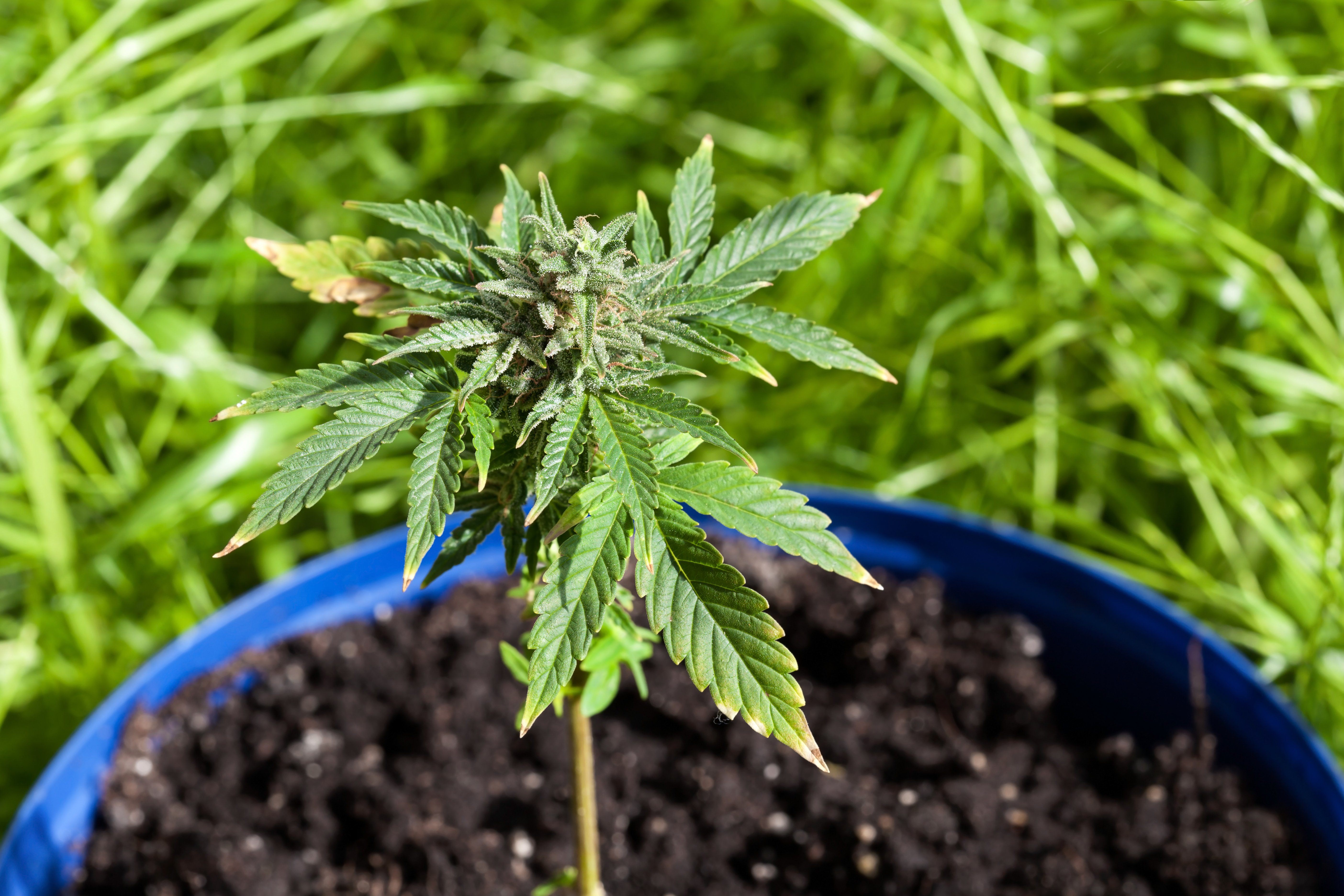


Crispy leaves on a cannabis seedling are a clear sign that the young plant is under stress. The leaves may feel dry, thin, rough, or brittle. Some seedlings develop brown tips, while others show dry edges, spots, curling, or fully damaged leaves. These symptoms can be worrying because seedlings are small and fragile. A problem that causes minor damage to a mature plant may cause serious harm to a seedling.
The seedling stage begins after the seed opens and the young plant rises above the growing medium. The first leaves are usually small, smooth, and rounded. These are called cotyledons, or seed leaves. After that, the plant begins to form its first true leaves with pointed and serrated edges. During this early stage, the plant has a very small root system. It cannot store or take in large amounts of water and nutrients. Its leaves are also thin and sensitive to changes in the growing area.
Cannabis seedlings need balanced conditions to grow well. They need enough water, but the growing medium should not remain soaked. They need light, but the light should not be too strong or too close. They may need nutrients later, but giving too much fertilizer early can burn their roots and leaves. They also need stable temperatures, suitable humidity, gentle airflow, and a growing medium that drains well.
Crispy leaves are not a plant disease by themselves. They are a symptom of another problem. Many different issues can cause similar leaf damage. This can make the problem difficult to diagnose. For example, underwatering can cause leaves to dry out and become brittle. However, overwatering can damage the roots and stop them from supplying enough water to the leaves. Both problems may result in dry, brown, or curling leaf tissue.
Too much light may also cause crispy leaves. A strong grow light placed close to a seedling may heat the leaves or damage the upper growth. Low humidity can make the problem worse because dry air pulls moisture from the leaves. A fan blowing directly at the seedling may also dry out the plant faster than the young roots can replace the lost water.
Fertilizer is another common cause of crispy cannabis seedling leaves. Seedlings usually need very little added nutrition during their first stage of growth. Many commercial soil mixes already contain enough nutrients for young plants. Adding strong liquid fertilizer to a rich growing medium can create excessive nutrient levels. This may cause yellow or brown leaf tips that later become dry and brittle. This problem is often called nutrient burn.
Water quality and pH may also affect a seedling. The roots need suitable conditions to absorb water and nutrients. When the pH is far outside the suitable range for the growing medium, certain nutrients may become harder for the roots to use. The grower may then notice yellowing, spots, slow growth, curling, or crispy areas. Adding more fertilizer may not solve the problem. It may increase stress if the real cause is poor nutrient uptake.
Root health is very important during the seedling stage. A dense or compact growing medium can hold too much water and block oxygen from reaching the roots. A container without good drainage may create the same problem. Damaged roots cannot supply the leaves with the water and minerals they need. Root problems may develop after rough transplanting, repeated overwatering, cold conditions, or the use of a container that stays wet for too long.
Pests and diseases can sometimes cause dry or damaged leaves. Small insects may feed on the leaf surface and leave pale spots, silver marks, holes, or brown patches. Fungus gnat larvae may damage weak roots in wet soil. Seedling diseases can also attack the stem near the surface of the growing medium. A seedling with a thin, dark, or collapsing stem may have a more serious problem than simple leaf stress.
Because several problems can cause similar symptoms, growers should avoid making fast changes without checking the plant first. Adding more water, more fertilizer, or stronger light may make the damage worse. It is better to inspect the seedling and its growing conditions carefully. Check the moisture of the growing medium, the distance from the light, the temperature, the humidity, the airflow, and the strength of any nutrients used. Look at the location of the leaf damage and note whether it affects old leaves, new leaves, tips, edges, or the whole plant.
The condition of new growth is often more important than the appearance of damaged leaves. Crispy leaf tissue usually does not become soft and green again. Once part of a leaf has dried out and died, the damage is permanent. However, the seedling may still recover if the main stem, roots, and growing tip remain healthy. New leaves that appear green, firm, and properly shaped are a positive sign.
A grower should focus on correcting the cause rather than trying to repair the damaged leaf. Stable conditions give the seedling the best chance to recover. Large and sudden changes can create more stress. Small adjustments followed by careful observation make it easier to see whether the plant is improving.
This guide explains how to identify the main causes of crispy cannabis seedling leaves. It covers watering mistakes, light burn, heat stress, low humidity, nutrient burn, pH problems, poor drainage, root damage, pests, and disease. It also explains how to judge whether a seedling can recover and how to prevent the same problem from happening again. By checking each part of the growing environment, growers can find the likely cause and support healthier new growth.
What Crispy Cannabis Seedling Leaves Look Like
Crispy cannabis seedling leaves can appear in several ways. The damage may begin at the tips, along the edges, or in small spots across the leaf surface. Some leaves may turn pale before they become brown and dry. Others may curl upward, downward, or inward. The exact pattern can help show what type of stress the seedling is facing.
Young cannabis plants are delicate. Their leaves are thin, and their roots are still small. Because of this, damage can spread faster than it would on a mature plant. A minor watering, light, heat, or nutrient problem may affect a seedling within a short time. Careful observation is important because the location and color of the damage can provide useful clues.
It is also important to check whether the damage affects the first seed leaves, the true leaves, or both. Some changes in the first seed leaves may be normal as the plant grows. However, damage that appears on new true leaves often means that the growing conditions need attention.
Brown or Burnt Leaf Tips
Brown or burnt leaf tips are one of the most common signs of stress in cannabis seedlings. The damage often begins at the very end of the leaf. At first, the tip may look pale yellow or light brown. As the problem continues, the affected area may become darker, dry, and brittle.
Burnt tips are often linked to excess nutrients. Cannabis seedlings need fewer nutrients than larger plants. Rich soil or strong liquid fertilizer may contain more nutrients than a young plant can handle. When nutrient levels are too high, the ends of the leaves may be the first areas to show damage.
However, brown tips do not always mean nutrient burn. Dry air, heat stress, salt buildup, or root problems may create a similar appearance. This is why growers should check the full plant and the growing area before deciding on a treatment.
A lightly damaged tip may remain small and stop spreading after the cause is corrected. The brown area will not turn green again because the tissue is already damaged. The main goal is to prevent the damage from moving farther into the leaf. Healthy new growth is a better sign of recovery than the appearance of the old leaves.
If several leaves develop brown tips at the same time, the problem may be affecting the whole root zone or growing space. If only one leaf has a small brown tip, the damage may have come from physical contact, a water droplet, or a brief period of stress.
Crispy Leaf Edges
Crispy leaf edges appear along the outer sides of the leaf. The edge may turn yellow first and then become brown, dry, and rough. In some cases, the damaged margin may feel thin and papery. The leaf may also curl as the tissue loses moisture.
Leaves that curl upward at the edges may be reacting to excess heat, strong light, or low humidity. This shape is sometimes called “tacoing” because the sides rise toward the center. When the air is too hot or dry, the seedling loses water faster through its leaves. The edges may dry out first because they are exposed to the surrounding air.
Downward curling can have different causes. It may appear when the growing medium stays too wet, when nitrogen levels are too high, or when the roots are under stress. The leaf tips may bend downward while the leaf remains dark green. If the leaf also feels heavy or swollen, overwatering may be part of the problem.
Leaf edges may also become crispy when the root zone contains too much salt. Fertilizer salts can build up in the growing medium, especially when strong nutrients are used often. High salt levels make it harder for the roots to absorb water. Even when the soil is moist, the leaves may show dry edges because the plant cannot use the water properly.
The pattern of damage is important. If the edges closest to a grow light are affected, light or heat stress may be more likely. If lower leaves show damage first, the cause may involve the roots, watering, or nutrients. If every leaf edge begins drying at once, the environment may be too hot or dry.
Brown Spots and Patches
Brown spots and dry patches may appear in the middle of cannabis seedling leaves. They may be small and round, or they may form uneven shapes. Some spots start yellow before the center turns brown. Other patches may look pale, silver, or rusty.
Small brown spots can be caused by water droplets left on the leaves under strong light. The droplets may increase the effect of intense light on a small area. The damaged spot may later dry out and become crispy. This type of damage is usually limited to the places where water remained on the leaf.
Pests can also create spots or patches. Thrips may leave pale or silver marks, while spider mites may cause many tiny light-colored dots. As feeding damage increases, the affected areas may become dry or brown. Checking the underside of each leaf can help reveal insects, eggs, webbing, or dark waste marks.
Incorrect pH can also lead to spotted leaves. When the root-zone pH is outside a suitable range, the seedling may not be able to absorb certain nutrients. This can cause mixed symptoms, including yellow areas, brown spots, twisted growth, or crispy patches. The problem may look like a nutrient shortage even when nutrients are present in the soil.
Root damage may create uneven patches because the plant cannot move enough water and nutrients into the leaves. A seedling with damaged or unhealthy roots may grow slowly, droop, or show several types of leaf damage at once. A sour smell, very wet soil, or weak roots can support this diagnosis.
Growers should also look at whether the spots are spreading. A single old spot may not be a serious concern. New spots that appear each day suggest that the cause is still active. The newest leaves should be watched closely because they show whether conditions are improving.
Cotyledons Versus True Leaves
Cannabis seedlings first produce two small, rounded leaves called cotyledons. These are often known as seed leaves. Cotyledons do not have the pointed, serrated shape of mature cannabis leaves. They store energy that supports the plant during its first stage of growth.
After the cotyledons open, the seedling begins producing true leaves. The first true leaves may have one serrated blade. Later leaves usually develop three, five, or more blades as the plant becomes larger.
Cotyledons may naturally turn pale, yellow, or dry as the seedling grows. This often happens after the true leaves have formed and the roots have begun supporting the plant. If the cotyledons slowly fade while the true leaves remain green and healthy, the change may be normal.
However, cotyledons that become crispy very early may show that the seedling is under stress. Strong soil, excess fertilizer, poor watering, or intense light can damage the plant before the true leaves develop. Early damage is more concerning when the seedling also stops growing or the stem becomes weak.
Damage on true leaves deserves closer attention. True leaves are responsible for photosynthesis and continued growth. Crispy tips, edges, or spots on new leaves often mean that a current problem is affecting the plant. The position of the damaged leaves can help identify the cause. Older lower leaves may show root or nutrient problems first, while upper leaves may show light and heat stress.
It is best to compare the cotyledons and true leaves instead of judging one leaf alone. A seedling with fading cotyledons and strong new growth may be healthy. A seedling with green cotyledons but damaged true leaves may be facing a new environmental or root-zone problem.
Crispy cannabis seedling leaves may show burnt tips, dry edges, brown spots, or curled tissue. The appearance and location of the damage can help narrow down the cause. Brown tips may point to excess nutrients, while upward-curled edges may suggest heat, strong light, or low humidity. Spots and patches may be linked to water droplets, pests, pH problems, or damaged roots.
Growers should also know the difference between cotyledons and true leaves. Cotyledons may naturally fade as the plant grows, but crispy damage on new true leaves often needs attention. Old damaged tissue will not become healthy again. The best sign of improvement is clean, green, and steady new growth.
How to Diagnose the Cause Before Treating the Seedling
Crispy cannabis seedling leaves can have several causes. The problem may come from too much water, too little water, strong light, excess fertilizer, low humidity, poor drainage, pests, or damaged roots. Many of these problems can look similar during the early stages. For this reason, it is important to inspect the seedling carefully before making changes.
A fast reaction is not always the best reaction. Adding more water, fertilizer, or supplements without knowing the cause can make the damage worse. A better method is to study where the symptoms began, review recent changes, inspect the growing medium, and check the entire seedling. This process can help you choose a safer and more useful treatment.
Check Where the Damage Started
The location of the crispy areas can provide important clues. Start by looking at the tips, edges, upper leaves, lower leaves, and newest growth. Note which part of the plant showed damage first.
Crispy leaf tips may be linked to excess fertilizer or salt buildup in the growing medium. The tips may first turn pale yellow. They can then become brown, dry, and brittle. This type of damage often affects several leaves in a similar way.
Dry leaf edges may point to heat stress, low humidity, strong airflow, or watering problems. Leaves exposed to hot air or a direct fan may lose water faster than the roots can replace it. The edges may curl upward and feel thin or papery.
Damage on the top leaves may suggest that the light is too strong or too close. The upper part of the seedling receives the most light and heat. These leaves may become pale, curl upward, or develop dry patches. Lower leaves may remain less damaged because they are farther from the light.
Damage that begins on the lower leaves may relate to root stress, poor watering, or nutrient problems. However, the first rounded seed leaves, called cotyledons, naturally become yellow and dry as the seedling grows. This is usually less concerning when the true leaves remain green and healthy.
New growth should also be checked. Twisted, spotted, or crispy new leaves may suggest pH trouble, root damage, pests, or a serious environmental problem. The growing tip is very important because it produces future leaves and branches.
Review Recent Changes
Think about anything that changed before the crispy leaves appeared. Seedling problems often begin after a new product, stronger light setting, transplant, or change in watering habits.
Check whether fertilizer was recently added. Young seedlings need fewer nutrients than older cannabis plants. A fertilizer dose that seems mild may still be too strong for a small root system. Rich soil can also contain enough nutrients without added plant food.
Consider whether the grow light was lowered or made brighter. A seedling may react badly when light intensity increases too quickly. Even when the room temperature seems normal, the leaf surface may become too warm under a powerful lamp.
Review the watering schedule. The seedling may have received a larger amount of water than usual, or the growing medium may have been allowed to become too dry. Watering based only on a fixed schedule can cause problems because drying speed changes with plant size, container size, airflow, temperature, and humidity.
A recent transplant can also lead to stress. Roots may have been disturbed, bent, or damaged during the move. The new growing medium may also hold more water or contain stronger nutrients than the old medium.
Changes in fans, heaters, air conditioners, or humidifiers should be considered as well. A fan that was moved closer may dry one side of the seedling. A heater may raise the leaf temperature, while an air conditioner may lower humidity.
Inspect the Growing Medium
The condition of the growing medium can reveal whether the roots are receiving the right balance of water and air. Touch the surface and check deeper when possible. The top layer may feel dry while the lower area remains wet.
Lift the container to judge its weight. A heavy pot often contains a large amount of water. A very light pot may be too dry. Learning the difference between a recently watered container and a dry container can make watering decisions easier.
Look for compacted soil. Dense growing media can stay wet for too long and limit oxygen around the roots. Seedling roots need both moisture and air. Without enough oxygen, root growth slows, and the plant may struggle to move water and nutrients into its leaves.
Check the drainage holes. Water should be able to leave the container. Blocked or missing holes can cause moisture to collect at the bottom. This creates a wet root zone even when the surface looks dry.
A white crust on the soil or container may be a sign of mineral or fertilizer salt buildup. These salts can affect root function and may contribute to burnt leaf tips. Green algae on the surface often suggests that the medium stays wet for long periods.
Smell the growing medium if root trouble is suspected. Healthy soil usually has a mild, earthy smell. A sour, rotten, or stagnant odor may point to poor drainage or decaying roots.
Examine the Whole Seedling
Do not focus only on the crispy leaf. Inspect the full plant, including the stem, leaf undersides, growing tip, and visible roots.
The stem should usually be firm and able to support the seedling. A thin, dark, pinched, or soft area near the soil surface may suggest damping-off disease. This problem is serious because the stem can collapse and stop water from reaching the leaves.
Look under the leaves for pests. Small insects may hide along veins or near the stem. Fine webbing, tiny pale dots, silver marks, or black specks can point to pest activity. A magnifying glass can make small pests easier to see.
Notice the direction of the leaves. Heavy, drooping leaves with wet soil may suggest overwatering. Thin, limp leaves with very dry soil may suggest underwatering. Leaves curling upward may be responding to heat, strong light, or dry air. Dark leaves with tips curling downward may be linked to excess nitrogen.
Check the growing tip for fresh leaves. Healthy new growth is one of the best signs that the seedling can recover. Older damaged leaves may stay brown even after the problem is fixed. The condition of the newest leaves gives a clearer picture of current health.
Avoid Treating Several Problems at Once
It can be tempting to change everything when a seedling looks unhealthy. However, changing the light, water, nutrients, humidity, pH, and soil at the same time can create more stress. It also becomes impossible to know which change helped or harmed the plant.
Choose the most likely cause based on the symptoms and recent conditions. Make one careful correction first. For example, reduce watering when the medium remains wet and the leaves droop. Move the light farther away when damage is strongest on the upper leaves. Stop feeding when several leaf tips appear burnt after fertilizer was added.
After making a change, watch the seedling for several days. Focus on new growth rather than expecting damaged tissue to repair itself. Crispy parts of a leaf will not usually become green again. Improvement appears as stronger growth, healthy color, and new leaves without fresh damage.
Avoid adding extra products as a general treatment. Root boosters, vitamins, supplements, and pest sprays may cause further stress when they are not needed. A young seedling often responds better to stable conditions than to many different products.
Diagnosing crispy cannabis seedling leaves requires careful observation. Begin by checking where the damage started and whether it affects the tips, edges, upper leaves, lower leaves, or new growth. Review recent changes involving watering, feeding, lighting, transplanting, airflow, heat, or humidity. Inspect the growing medium for excess moisture, severe dryness, poor drainage, compacted soil, algae, or salt buildup. Examine the stem and leaf undersides for signs of disease or pests.
Make one correction at a time and monitor the newest growth. This approach reduces the risk of further stress and makes it easier to identify the true cause. A clear diagnosis gives the seedling the best chance to recover and continue healthy growth.
Overwatering and Underwatering Cannabis Seedlings
Watering problems are one of the most common reasons cannabis seedling leaves become crispy, curled, or damaged. Young seedlings have small root systems, so they cannot handle large changes in moisture. Too much water can remove oxygen from the root zone, while too little water can cause the plant to dry out. Both problems may lead to weak growth, brown leaf tips, and brittle leaf edges.
The symptoms can sometimes look similar, which makes proper diagnosis important. A grower should check the moisture of the growing medium, the weight of the container, the appearance of the leaves, and the drainage conditions before adding more water.
How Overwatering Causes Leaf Damage
Overwatering does not always mean that too much water was added at one time. It often means the growing medium stays wet for too long. Cannabis roots need both water and oxygen. When soil or another growing medium remains soaked, the air spaces around the roots fill with water. This limits the amount of oxygen available to the root system.
Without enough oxygen, the roots cannot work well. They may struggle to absorb water and nutrients, even when the growing medium is wet. This can cause the seedling to droop, grow slowly, or develop yellow and brown areas on the leaves. The leaf edges may curl downward, and damaged parts may become dry or crispy over time.
Overwatered seedlings often have leaves that look heavy, thick, or swollen. The leaves may hang downward from the stem but still feel firm rather than dry. The growing medium may remain dark and wet for several days. Green algae may appear on the surface if the area stays damp and receives light.
A sour or unpleasant smell from the soil may also suggest poor root conditions. This smell can appear when the growing medium remains wet and lacks airflow. In serious cases, harmful fungi and bacteria may attack the weak roots. Root damage can make the leaf symptoms worse because the seedling can no longer control water and nutrient uptake.
Large containers can increase the risk of overwatering. A small seedling may only have roots near the center of the pot. When the entire container is soaked, the outer soil may remain wet for a long time because the roots cannot use all the moisture. Dense or compact soil can also hold water and slow drainage.
How Underwatering Causes Crispy Leaves
Underwatering happens when the seedling does not receive enough water to support its leaves and new growth. It may also occur when the growing medium dries too quickly between waterings. Young seedlings have limited root systems, so they cannot search through a large area for moisture.
When the root zone becomes too dry, the plant loses water through its leaves faster than the roots can replace it. The leaves may begin to droop, curl, or feel thin. If the dry condition continues, the tips and edges can turn brown and crispy. The leaf tissue may feel like paper and may break when touched.
An underwatered seedling often looks weak and limp. The leaves may hang downward, and the stem may lose some firmness. Unlike overwatered leaves, which can feel thick and heavy, underwatered leaves usually feel soft, thin, or dry.
The growing medium may look pale, dusty, or cracked. In peat-based soil, the mix may shrink and pull away from the sides of the container. Water may then run down the gap between the soil and the pot instead of soaking into the root zone. This can make the grower think the seedling has received enough water when the center of the soil is still dry.
Small containers and seedling cells can dry out quickly, especially under strong lights or in warm, dry air. A fan blowing directly at the plant may also increase moisture loss. Seedlings near a heater, open window, or hot grow light may need more frequent checks.
How to Tell the Difference
The best way to separate overwatering from underwatering is to check the growing medium before watering again. Touch the surface and gently check the moisture slightly below it. The top layer can look dry even when the lower soil is still wet, so checking only the surface may lead to another watering mistake.
The weight of the container is also helpful. A wet container feels heavier than a dry one. Lifting the pot each day can help a grower learn how it feels at different moisture levels. This method becomes easier with practice and can prevent watering based only on a fixed schedule.
Leaf texture provides another clue. Overwatered leaves may look droopy but feel firm, thick, or swollen. Underwatered leaves often feel thin, limp, or brittle. The growing medium around an overwatered plant usually stays wet for a long time. The medium around an underwatered plant may be very light, dry, and separated from the container wall.
The speed of recovery can also help identify the cause. A mildly underwatered seedling may begin to lift its leaves within several hours after proper watering. An overwatered seedling usually takes longer to recover because the root zone must dry and regain oxygen.
A grower should avoid adding water to a drooping plant without checking the soil first. Drooping alone does not prove that the plant is thirsty. Adding more water to an already wet root zone can increase the damage.
Better Seedling Watering Practices
Cannabis seedlings need moisture, but they do not need the entire container to remain soaked. Water should be applied in small, controlled amounts around the young root zone. This encourages the roots to grow outward while avoiding large areas of wet soil.
The amount of water depends on the size of the seedling, the container, the growing medium, and the environment. There is no single watering schedule that works for every plant. Conditions can change based on temperature, humidity, light strength, airflow, and container size.
Instead of watering every day without checking, growers should watch how quickly the medium dries. The goal is to keep the root zone lightly moist while allowing air to return between waterings. The medium should not stay muddy, but it should not become completely dry for long periods.
Containers must have open drainage holes. Extra water should be able to leave the pot instead of collecting around the roots. Drainage trays should also be emptied when standing water gathers beneath the container.
A light and airy seedling mix can help control moisture. Dense garden soil may hold too much water and can make root growth difficult. Adding suitable aeration materials to a growing mix may improve drainage and allow more oxygen to reach the roots.
Water should be added slowly. Pouring too quickly can create channels in the soil, causing water to run past the root zone. Slow watering gives the growing medium time to absorb moisture evenly.
After correcting a watering problem, the grower should watch the newest leaves. Old crispy tissue will not become healthy again. Improvement is shown when fresh leaves grow without brown tips, curling, or dry edges.
Both overwatering and underwatering can cause cannabis seedling leaves to become crispy, brown, or curled. Overwatering keeps the root zone wet and reduces oxygen around the roots. Underwatering removes the moisture the seedling needs to support its leaves and new growth.
The condition of the growing medium, the weight of the container, and the texture of the leaves can help identify the problem. Growers should avoid watering on a strict schedule. It is better to check the moisture level and water according to the needs of the seedling.
Small amounts of water, good drainage, an airy growing medium, and regular observation can prevent most watering problems. Healthy new growth is the clearest sign that the seedling is recovering.
Light Burn, Heat Stress, and Low Humidity
Cannabis seedlings are very sensitive to their growing environment. Their roots are still small, and their leaves are thin and tender. This means they cannot handle strong light, high heat, or very dry air as well as older plants. When these conditions are not balanced, the leaves may become dry, curled, pale, or crispy.
Light burn, heat stress, and low humidity can cause similar symptoms. This can make the problem hard to identify at first. A grower should look at where the damage appears, how close the light is, and how warm and dry the growing space feels. It is also important to check the temperature and humidity with reliable tools.
Light Burn in Young Cannabis Plants
Light burn happens when a seedling receives more light than it can use. This often happens when a grow light is too close to the plant or is set at a high power level. Young seedlings need light for healthy growth, but stronger light does not always lead to faster growth. Too much light can damage the leaf surface and increase water loss.
The leaves closest to the light usually show damage first. Upper leaves may become pale green, yellow, or almost white. The edges may turn upward, while the tips may become brown and dry. In serious cases, the leaf surface may feel thin, brittle, or crispy.
Light burn is often confused with nutrient burn. Nutrient burn usually begins at the tips of several leaves, including leaves that are not closest to the light. Light damage is more likely to affect the highest parts of the plant. The side facing the lamp may also look worse than the shaded side.
A seedling can also suffer when the light level increases too quickly. For example, a plant started under a weak lamp may become stressed if it is suddenly placed under a much stronger light. The seedling needs time to adjust. Changes should be made in small steps instead of all at once.
When light burn is suspected, the grower can raise the lamp, lower its power, or shorten the period of strong light. The exact distance depends on the type of lamp and its strength. The goal is to provide enough light for steady growth without making the leaves hot, pale, or curled.
Heat Stress
Heat stress occurs when the air or leaf surface becomes too warm. High temperatures cause the seedling to lose water through its leaves at a faster rate. A young root system may not be able to replace that moisture quickly enough. The leaves then begin to curl, droop, or dry along the edges.
Heat stress often causes the sides of the leaves to turn upward. This shape is sometimes called “tacoing” because the leaf begins to fold like a taco shell. The tips may also become dry and brown. The growing medium may dry much faster than normal, even when the seedling was recently watered.
Grow lights are a common source of excess heat, especially when they are close to the plant. Direct sunlight through a window may also heat a seedling more than expected. Other possible heat sources include radiators, heating vents, warm shelves, or enclosed grow spaces with poor air movement.
The grower should measure the temperature near the top of the seedling. A room may feel comfortable at one level but be much warmer directly under the lamp. The temperature should also be checked during the warmest part of the light cycle.
Heat problems should be corrected gradually. The light may need to be raised, or ventilation may need to be improved. Warm air should have a way to leave the growing space. Cooler air should also be able to enter. Sudden exposure to very cold air should be avoided because rapid temperature changes can cause more stress.
Low Humidity
Humidity is the amount of moisture in the air. Very low humidity means the surrounding air is dry. Dry air pulls moisture from the leaves. Mature plants can often manage this water loss because they have larger root systems. Seedlings have fewer roots and less stored water, so they may become stressed quickly.
Low humidity may cause the leaf edges to become dry or crispy. Leaves may curl upward as the plant tries to reduce the surface area exposed to the air. Growth may slow, and new leaves may appear smaller than normal. The growing medium may also dry more quickly.
Low humidity is common in rooms with air conditioning, heating systems, or constant strong ventilation. A fan placed too close to the seedling can make the problem worse. Even when the room humidity seems reasonable, direct airflow can remove moisture from the leaf surface.
Humidity should be measured with a hygrometer rather than guessed. A reading taken near the plant is more useful than one taken across the room. The grower should also watch for large changes between the light and dark periods.
Humidity can be raised with a humidifier or by changing the way air moves through the growing area. However, the space should not become wet or stagnant. Very high humidity with poor airflow may increase the risk of mold and stem disease. The goal is a stable environment, not extreme moisture.
Correcting Environmental Stress
The best way to help a stressed seedling is to make small and careful corrections. Moving a light much farther away, adding a powerful fan, and changing humidity at the same time may create new problems. It also becomes difficult to know which change helped.
Start by checking the light distance and heat near the leaves. If the upper leaves are pale, curled, or crispy, reduce the light intensity slightly or increase the distance. Watch the newest growth for improvement. Existing burnt tissue will not become healthy again, but new leaves should appear greener and smoother.
Airflow should be gentle. The leaves may move slightly, but the stem should not bend hard or shake all day. A fan should usually move air around the space instead of blowing directly at the seedling.
Temperature and humidity should remain as steady as possible. Large changes between day and night can stress a young plant. A thermometer and hygrometer make it easier to track these conditions. Growers should record readings and compare them with the appearance of the plant.
Watering should also be checked because hot and dry conditions change how quickly the growing medium loses moisture. The seedling may need water sooner, but the soil should not be kept constantly wet. Always check the moisture level before adding more water.
Light burn, heat stress, and low humidity can all cause cannabis seedling leaves to become curled, pale, brown, or crispy. Light burn usually affects the upper leaves closest to the lamp. Heat stress often causes upward curling and fast water loss. Low humidity dries the leaf edges and places extra pressure on the small root system.
The most effective response is to measure the conditions near the seedling and make gradual changes. Reduce overly strong light, remove excess heat, provide gentle airflow, and keep humidity stable. Damaged leaves may not recover, but healthy new growth is a clear sign that the environment is improving.
Nutrient Burn and Fertilizer Problems
Cannabis seedlings need nutrients to grow, but they need only small amounts during their first stage of life. Their roots are still short and delicate. They cannot handle the same fertilizer strength as a mature cannabis plant. When the growing medium contains too much plant food, the roots may struggle to take in water. The leaves can then develop yellow, brown, dry, or crispy areas. This condition is often called nutrient burn.
Nutrient burn can happen in soil, coco coir, and hydroponic systems. It may come from strong liquid fertilizer, rich potting soil, slow-release plant food, compost, or several products used at the same time. A seedling may also suffer when fertilizer is added too often or when salts collect around the roots.
What Nutrient Burn Looks Like
Nutrient burn often begins at the very ends of the leaves. The tips may first turn pale yellow. Over time, they can become brown, dry, and brittle. The damaged tips may feel crispy when touched. If the problem continues, the brown areas can spread along the outer edges of the leaves.
Some seedlings also develop very dark green leaves. The leaves may look shiny or thick. Their tips may bend downward and form a shape that looks like a claw. This downward curling is often linked to too much nitrogen, although watering and root problems can cause similar signs.
Growth may also slow down. New leaves may remain small, twisted, or weak. The seedling may stop producing healthy growth because the root zone contains more nutrients than it can safely use. Severe nutrient burn can damage the roots and make it harder for the plant to absorb water.
The pattern of damage is important. Nutrient burn usually starts at the tips because extra salts affect the most distant parts of the leaf first. Damage caused by intense light may appear mainly on the upper leaves closest to the lamp. Underwatering may make the whole leaf thin, limp, and dry. Looking at all symptoms helps prevent the wrong treatment.
Why Seedlings Are Easily Overfed
A cannabis seed contains enough stored energy to support the plant during its earliest growth. The first round leaves, called cotyledons, help feed the young plant after it emerges. Once the first true leaves develop, the seedling begins using more nutrients from the root zone. However, its needs are still low.
Many potting mixes already contain fertilizer. Some products are described as rich, amended, compost-based, or designed to feed plants for several weeks or months. Adding liquid nutrients to these mixes may create an excessive nutrient level. The grower may believe the seedling needs extra food even though the soil already contains enough.
Problems may also happen when several products are combined. A base fertilizer, root additive, compost tea, vitamin product, and mineral supplement may each appear mild when used alone. Together, they may create a mixture that is too strong for a seedling.
Measuring errors are another common cause. A grower may use a feeding rate meant for mature plants instead of seedlings. Fertilizer may also be added without fully measuring the amount of water. Even a small mistake can create a strong solution when only a small container is being mixed.
Frequent feeding can also cause salt buildup. Water may evaporate or be used by the plant, while some fertilizer salts remain in the growing medium. Each new feeding adds more salts. Over time, the root zone may become too concentrated, even when each single feeding seemed reasonable.
Correcting Excess Nutrients
The first step is to stop adding fertilizer. A stressed seedling does not need more products to correct the problem. Adding extra nutrients, boosters, or supplements can make the damage worse.
The grower should then check the type of growing medium. A pre-fertilized soil may continue releasing nutrients for several weeks. In this case, plain water may be enough until the seedling produces healthy new growth. A light seed-starting mix usually contains fewer nutrients, so feeding may be needed later, but not while burn symptoms are active.
The moisture level must also be checked before watering. Nutrient burn and overwatering can happen at the same time. Pouring a large amount of water through a tiny seedling container may remove some salts, but it can also leave the roots without enough oxygen. Repeated flushing is especially risky when the plant is small, weak, or growing in dense soil.
When excess fertilizer is mild, it may be safer to stop feeding and allow the plant to use the remaining nutrients naturally. Water should be added only when the root zone needs it. The container should drain freely, and it should not remain soaked for long periods.
More serious salt buildup may require careful rinsing, depending on the growing medium and system. However, any correction should be gentle. Sudden changes can place more stress on damaged roots. After the root zone has been corrected, the seedling should be given time to recover.
The burnt tips will not become green again. Dead leaf tissue cannot repair itself. The grower should watch the newest leaves instead. If the new growth is green, firm, and free from burnt tips, the nutrient problem is likely improving.
Nutrient Deficiency Versus Nutrient Burn
Nutrient burn happens when the root zone contains too much fertilizer. A nutrient deficiency happens when the plant cannot get enough of one or more nutrients. These conditions may look similar because both can cause yellowing, brown spots, slow growth, and dry leaf tissue.
Burn usually begins at the leaf tips. Deficiency symptoms may begin on older leaves, newer leaves, between the veins, or across larger areas. The exact pattern depends on which nutrient is affected.
A seedling can also show deficiency-like signs even when enough nutrients are present. Incorrect pH, damaged roots, compacted soil, cold conditions, and overwatering can prevent the plant from absorbing nutrients. This is sometimes called nutrient lockout. Adding more fertilizer will not solve the cause. It may increase salt levels and create true nutrient burn.
Before feeding a discolored seedling, the grower should check moisture, drainage, pH, temperature, and root health. The type of soil or growing medium should also be reviewed. A young plant in rich soil is less likely to need more fertilizer than a seedling growing in a medium with little or no nutrient content.
Nutrient burn is a common reason cannabis seedling leaves develop crispy tips and edges. It often begins with yellow leaf tips that become brown, dry, and brittle. Very dark green leaves, downward curling, and slow growth may also appear.
Seedlings are easy to overfeed because their roots are small and their nutrient needs are low. Rich soil, strong liquid fertilizer, repeated feeding, and several additives used together can overload the root zone. The safest response is usually to stop feeding, check the growing medium, correct watering habits, and watch the newest growth.
Damaged leaf tips will not return to normal. Healthy new leaves are the clearest sign that the seedling is recovering. Careful feeding, stable root conditions, and gradual changes can help prevent nutrient burn from returning.
Incorrect pH, Salt Buildup, and Water Quality
Cannabis seedlings need a stable root zone so they can take in water and nutrients. When the pH is too high or too low, the roots may not absorb certain nutrients well. This can happen even when those nutrients are already present in the soil or growing medium. The result may look like a nutrient shortage, but adding more fertilizer can make the problem worse.
Water quality also affects young plants. Water may contain minerals, salts, chlorine, or other substances that build up over time. Seedlings have small and sensitive root systems, so they may react faster than mature plants. Crispy leaf tips, brown edges, spots, curling, and slow growth can all be linked to poor root-zone conditions.
How pH Affects Nutrient Uptake
The pH level shows how acidic or alkaline a liquid or growing medium is. Cannabis roots can absorb nutrients best within a suitable pH range. The correct range depends on the type of growing method being used. Soil, coco coir, and hydroponic systems do not always require the same pH level.
When the pH moves too far outside the suitable range, certain nutrients become harder for the roots to absorb. This condition is often called nutrient lockout. The plant may have enough calcium, magnesium, iron, or other nutrients around its roots, but it cannot use them well.
A seedling with pH trouble may show more than one symptom at the same time. Some leaves may turn pale, while others develop brown spots or dry edges. New growth may become twisted, small, or uneven. The seedling may also stop growing even though it has enough light and water.
These mixed symptoms can confuse growers. They may think the plant needs more fertilizer and add a stronger nutrient solution. However, extra nutrients do not fix a pH problem. They may increase the amount of salt around the roots and cause further damage.
Before adding nutrients, check the pH of the water and the growing medium when possible. Make sure the testing tool is clean and working correctly. Low-cost pH meters may give false readings when they are not calibrated. Test strips or liquid test kits can also provide a basic reading, but they may be less exact.
Salt and Mineral Buildup
Salt buildup can happen when fertilizer minerals remain in the growing medium after water evaporates or is used by the plant. Each feeding may leave a small amount of unused material behind. Over time, these materials can collect around the roots.
Hard water may also add minerals such as calcium and magnesium. These minerals are not always harmful, but very high levels can affect the nutrient balance. Water-softening systems can create another problem because some of them replace minerals with sodium. Too much sodium can damage roots and reduce the plant’s ability to take in water.
Visible signs of mineral buildup may appear as a white or light-colored crust on the soil surface, container edges, drainage holes, or growing cubes. However, buildup can exist even when no crust is visible.
High salt levels pull water away from plant roots. This makes it harder for the seedling to stay hydrated. The growing medium may be wet, but the plant can still act thirsty. Leaves may droop, curl, or become dry at the tips. Root growth may slow, and the seedling may stop producing healthy new leaves.
Frequent feeding is a common cause of salt buildup. Seedlings usually need fewer nutrients than mature cannabis plants. A rich potting mix may already contain enough food for early growth. Adding liquid fertilizer too soon can raise salt levels quickly.
Checking Water and Root-Zone Conditions
Start by learning what is in the water source. Tap water quality can vary between locations. Some water contains many dissolved minerals, while other water contains very few. A basic water report may provide useful details about hardness, sodium, chlorine, and mineral content.
A pH meter can help check acidity or alkalinity. An electrical conductivity meter, often called an EC meter, can help estimate the amount of dissolved material in water. A high reading may suggest strong nutrients or mineral-heavy water. A low reading may show that the water contains very few dissolved minerals.
Meters must be cared for properly. A dirty probe may give an incorrect result. The meter should be calibrated with the correct solution based on the maker’s directions. Some pH probes must remain moist during storage. Letting the probe dry out may damage it.
Runoff water can sometimes offer clues about root-zone conditions. Runoff is the water that drains from the bottom of the container. A large difference between the input water and the runoff may suggest buildup or pH drift. However, runoff readings are not always exact, especially in small seedling containers. They should be used with plant symptoms and growing-medium conditions rather than used alone.
Do not chase perfect numbers by making constant adjustments. Small changes from day to day are less harmful than sudden swings. Stable conditions are more important than forcing every reading to an exact value.
Making Gradual Corrections
Correct pH and salt problems slowly. Sudden changes can shock a seedling that is already stressed. Begin by checking whether the water, fertilizer, and growing medium are suitable for the growing method.
Stop adding extra fertilizer when the leaf tips are burnt or the medium may contain too many salts. Use water with an appropriate pH for the growing system. Avoid adding several products at once. Each additive changes the final mineral level and may also affect pH.
Flushing means passing a large amount of water through the growing medium to remove extra salts. This method must be used carefully with seedlings. A large flush can leave the root zone soaked for too long. This may create low oxygen levels and cause root damage. In many cases, lighter watering with properly adjusted water is safer than flooding a small container.
Allow the growing medium to drain well after watering. Do not leave the container sitting in runoff. Watch the seedling for several days and focus on the newest leaves. Old crispy tissue will not return to normal, even after the cause is fixed.
Healthy new growth should appear smoother, greener, and free from new brown tips. Growth may remain slow for a short time while the roots recover. Avoid making another major change unless the symptoms continue to spread.
Incorrect pH, salt buildup, and poor water quality can prevent cannabis seedlings from using water and nutrients correctly. These problems may cause crispy tips, brown spots, curling, yellowing, or slow growth. Adding more fertilizer without checking the root zone may make the damage worse.
Check water quality, pH, fertilizer strength, drainage, and the condition of the growing medium. Use clean and calibrated testing tools when available. Make corrections gradually and avoid soaking a stressed seedling with a heavy flush. Damaged leaves may stay brown, so judge recovery by the health of the new growth.
Soil, Drainage, Root Damage, and Transplant Stress
Healthy roots are important for healthy cannabis seedlings. A seedling may have enough light, water, and nutrients, but it can still develop crispy leaves when its roots are under stress. The roots collect water and minerals from the growing medium. They also need oxygen to stay active. When the soil is too dense, too wet, too dry, or poorly drained, the roots may stop working well.
Root problems often appear as symptoms above the soil. The seedling may droop, grow slowly, turn yellow, or develop dry and crispy leaf tips. These signs can look like nutrient problems or light stress. For this reason, growers should inspect the growing medium and watering pattern before adding more fertilizer.
Poorly Draining or Compacted Soil
Cannabis seedlings need a growing medium that holds some moisture but also allows extra water to drain away. Soil that stays wet for too long can push oxygen out of the root zone. Without enough oxygen, the roots cannot take in water and nutrients in a normal way. The plant may look thirsty even though the soil is wet.
Poorly draining soil often feels heavy, sticky, or packed together. Water may sit on the surface before soaking in. The container may also remain heavy for many days after watering. In some cases, the soil may develop a stale or sour smell. Green algae may appear on the top if the surface stays wet and receives light.
Compacted soil creates a similar problem. When soil particles are pressed tightly together, there are fewer air spaces around the roots. Young roots may have trouble spreading through the container. Water may also move unevenly. Some areas may stay soaked while other areas remain dry.
A light and airy seedling mix can reduce these problems. The medium should be loose enough for young roots to grow without strong resistance. It should also drain at a steady rate. The container must have open drainage holes so extra water can leave freely.
Growers should avoid pressing the soil down firmly when filling a container. Gentle settling is usually enough. Packing the soil tightly does not give the plant better support. It can make the root zone harder to manage.
Containers That Are Too Large or Too Small
Container size can affect how quickly the growing medium dries. A very large container holds much more soil than a small seedling needs. The young root system may only reach a small area near the center. When the whole container is soaked, the unused soil may remain wet for a long time.
This can increase the risk of overwatering and low oxygen around the roots. The seedling may develop drooping leaves, slow growth, yellowing, or crispy edges. The grower may then water again because the plant looks weak, which makes the problem worse.
When a seedling is placed in a large container, water should be applied carefully. The grower does not always need to soak all the soil during the early stage. A controlled amount of water around the young root zone may be easier to manage. As the roots spread, the watering area can slowly become wider.
Containers that are too small can also cause trouble. Small cells and cups may dry very quickly, especially under warm lights or strong airflow. A seedling may become dry within a short period. The leaves may wilt, curl, or become thin and crispy.
A small container may also restrict the root system if the seedling stays in it for too long. Roots may circle the inside of the cup or form a tight mass at the bottom. The plant may need water more often and may stop growing at a normal rate.
The best container size depends on the age of the seedling, the growing medium, and the watering routine. The main goal is to provide enough space for root growth without creating a large area of soil that stays wet for many days.
Root Damage
Young roots are delicate and can be damaged easily. Damage may happen during transplanting, when the root ball falls apart or when exposed roots are pulled. Roots may also be harmed by compacted soil, extreme temperatures, excess fertilizer, or long periods of poor drainage.
When roots are damaged, they may not absorb enough water to replace what the leaves lose. This can cause the leaves to droop or develop dry edges. The plant may look underwatered even when the soil contains moisture.
Cold growing media can slow root activity. Very warm soil can also stress the roots and increase the risk of harmful microbes. The root zone should remain stable rather than moving between extreme temperatures.
Strong fertilizer can burn young roots. This may happen when a seedling is placed in rich soil or receives concentrated liquid nutrients too early. Root injury from excess salts may lead to brown leaf tips, dark green leaves, curling, and slow growth.
Growers should avoid digging around the root zone to check the roots. This can cause more damage. It is usually better to judge root health by the condition of the soil, the speed of growth, and the appearance of new leaves.
Transplant Shock
Transplant shock is stress that appears after a seedling is moved to a new container. The plant may droop, slow down, or show mild leaf damage for a short time. This happens because the roots need time to adjust to the new soil and recover from handling.
A rough transplant can break small roots. The root ball may also become dry if it is left exposed for too long. Transplanting into very wet, very dry, or heavily fertilized soil can add further stress.
Strong light may make transplant shock worse. A stressed root system may not be able to supply enough water while the leaves are losing moisture under intense lighting. Strong airflow can cause a similar problem. A fan aimed directly at the seedling may dry the leaves faster than the damaged roots can replace the water.
Watering after transplanting should be controlled. The soil should be moist enough to settle around the root ball, but it should not remain soaked. Repeated watering during the first few days can reduce oxygen and delay recovery.
The seedling should also be given time before more major changes are made. Adding fertilizer, changing the light, moving the plant again, and adjusting the soil at the same time can increase stress. Stable conditions allow the roots to recover more easily.
Healthy new growth is the best sign that the transplant was successful. Older leaves may remain damaged, but the newest leaves should begin to look normal as the root system becomes active again.
Improving the Root Environment
A healthy root environment starts with a loose growing medium and good drainage. The container should have enough holes for extra water to escape. Water should move through the soil without leaving it completely dry or fully soaked for long periods.
The seedling should be watered based on the condition of the growing medium, not only on a fixed schedule. The top layer may begin to dry before more water is needed, but the entire root zone should not become extremely dry.
During transplanting, the root ball should be handled gently. The stem should not be pulled to remove the plant from its first container. Supporting the soil and keeping the root mass together can reduce damage.
After transplanting, the plant should be kept under stable conditions. Moderate light, gentle airflow, suitable moisture, and no unnecessary feeding can support recovery. The grower should watch the newest leaves rather than expecting damaged leaves to repair themselves.
Crispy cannabis seedling leaves may be linked to problems below the soil. Dense soil, poor drainage, containers of the wrong size, damaged roots, and transplant stress can all reduce the plant’s ability to take in water and nutrients. Older damaged leaves may not return to normal, but healthy new growth can show that the root system is recovering. A loose growing medium, careful watering, open drainage holes, gentle transplanting, and stable conditions give seedlings the best chance to develop strong roots and healthy leaves.
Wind Burn, Pests, and Seedling Diseases
Crispy cannabis seedling leaves are not always caused by water, light, or fertilizer problems. Strong airflow, insects, and plant diseases can also damage young leaves. Seedlings have thin stems, soft leaves, and small root systems. This makes them easier to harm than older plants.
A grower should inspect the entire seedling before choosing a treatment. Look at the top and bottom of every leaf. Check the stem near the soil surface. Study the growing medium for insects, mold, algae, or an unusual smell. Finding the true cause early can prevent the damage from spreading.
Wind Burn
Cannabis seedlings need fresh air, but strong wind can damage them. A fan that blows directly at a young plant for many hours can remove moisture from the leaves too quickly. The seedling may not have a large enough root system to replace the lost water.
Wind burn often affects the side of the plant that faces the fan. Leaves may curl, twist, or fold upward. Their edges may become dry, brown, and crispy. The leaves may also look rough or uneven. In severe cases, the seedling may lean away from the airflow.
Gentle movement can help strengthen a young stem. However, the leaves should not flap, shake hard, or stay pushed to one side. A fan should move air around the growing area instead of blowing straight at the seedling.
Move the fan farther away or point it toward a wall so the air spreads across the room. Use the lowest setting when possible. The goal is to create mild air movement around the plant. The seedling should move only slightly.
Strong airflow can also dry the growing medium faster than expected. A seedling near a fan may need to be checked more often than other plants. However, do not water it on a fixed schedule. Test the growing medium first because overwatering can create another problem.
Common Seedling Pests
Several pests can damage cannabis seedlings and leave the foliage dry or crispy. Some insects drink sap from the leaves. Others damage roots or scrape the surface of the leaf. Small pest problems can become serious because seedlings have very little healthy foliage to spare.
Spider mites are tiny pests that often live under leaves. They remove plant fluids and leave small pale dots on the leaf surface. A heavy infestation may cause leaves to turn yellow, dry out, and become brittle. Fine webbing may appear between leaves or near the stem.
Thrips are narrow insects that scrape plant tissue before feeding on it. Their damage may look like silver lines, pale patches, or small scars. New leaves may appear twisted or misshapen. Dark specks of waste may also appear near damaged areas.
Aphids are soft-bodied insects that often gather on stems, leaf undersides, and new growth. They feed on plant sap and may cause curling, yellowing, or weak growth. Aphids can be green, black, brown, or pale. They may also leave behind a sticky substance known as honeydew.
Fungus gnats usually fly around wet growing media. Adult gnats are more annoying than harmful, but their larvae can feed on fine roots. Root damage makes it harder for a seedling to absorb water and nutrients. The leaves may droop, yellow, or develop dry edges. Fungus gnats are often a sign that the growing medium stays wet for too long.
Check seedlings each day. Use a small magnifying glass if possible because many pests are difficult to see. Pay close attention to leaf undersides, young growth, and the area where the stem meets the growing medium.
Fungal and Root Diseases
Cannabis seedlings can develop diseases when the environment stays wet, cold, or poorly ventilated. Dirty tools, reused containers, infected growing media, and standing water can also increase the risk.
Damping-off is one of the most serious seedling diseases. It attacks the stem near the soil line. The affected area may become thin, dark, soft, or water-soaked. The seedling may suddenly fall over even though the leaves looked healthy the day before.
A seedling that has fully collapsed from damping-off is unlikely to recover. Prevention is much easier than treatment. Use clean containers, fresh growing media, good drainage, and gentle airflow. Avoid keeping the base of the stem constantly wet.
Root disease may also develop when the growing medium does not receive enough oxygen. Healthy young roots are usually pale and firm. Damaged roots may become brown, soft, slimy, or unpleasant smelling. The seedling may grow slowly even when the leaves receive enough light.
Do not assume that every yellow or crispy leaf is a nutrient deficiency. Diseased or damaged roots may be unable to absorb nutrients that are already present. Adding more fertilizer can increase stress and make the root zone worse.
Inspecting and Isolating Affected Plants
Inspect an unhealthy seedling away from other plants when possible. Look under each leaf, along the stem, and around the surface of the growing medium. Check for moving insects, eggs, webbing, sticky material, mold, or damaged tissue.
If pests or disease are suspected, separate the seedling from healthy plants. Isolation helps reduce the chance of insects or spores spreading through the growing area. Do not move between affected and healthy plants without cleaning your hands and tools.
Clean trays, containers, work surfaces, and nearby equipment. Remove fallen leaves and dead plant material because they can shelter pests and support mold growth. Avoid leaving standing water under pots.
Treatment should match the problem. Do not spray a seedling with several products at the same time. Young leaves can be damaged by strong soaps, oils, or pest-control mixtures. Test any treatment carefully and follow the product label. Avoid spraying while intense grow lights are on because wet leaves may become damaged.
Continue checking the seedling after making changes. Old crispy areas will not return to normal. Improvement should appear as healthy new growth, fewer pests, a stronger stem, and a more stable root zone.
Wind burn, pests, and diseases can all cause cannabis seedling leaves to become dry, curled, spotted, or crispy. Strong airflow usually damages the side facing the fan, while pests often leave dots, silver marks, webbing, sticky residue, or distorted growth. Diseases may weaken the stem or damage the roots, especially when the growing medium stays wet.
Use gentle air movement, keep the growing area clean, inspect seedlings often, and separate affected plants when needed. Focus on the exact cause instead of applying several treatments at once. Early action gives a cannabis seedling the best chance to produce healthy new leaves and continue growing.
Can a Cannabis Seedling Recover From Crispy Leaves?
A cannabis seedling can often recover from crispy leaves if the main stem, roots, and growing tip are still alive. The chance of recovery depends on how serious the damage is and how quickly the cause is corrected. A few dry tips or brown edges may not stop the seedling from growing. However, widespread damage, stem rot, or a dead growing point can make recovery much harder.
Crispy leaves are a sign that the plant has been under stress. Common causes include too much fertilizer, strong light, high heat, low humidity, poor watering habits, root damage, and unsuitable pH. Fixing the correct problem is more important than trying several treatments at once. Too many sudden changes may place the seedling under even more stress.
Judge the Growing Tip and Stem
The growing tip is the small area at the top of the seedling where new leaves form. It is one of the best places to check when deciding whether a plant can recover. If the growing tip is green, firm, and starting to produce new leaves, the seedling still has a good chance of improving. Even if the older leaves have brown tips, healthy new growth shows that the plant is still active.
Look closely at the main stem as well. A healthy stem should feel firm and stand upright. Its color may be green, pale green, or slightly purple, depending on the plant and growing conditions. A firm stem can still carry water and nutrients between the roots and leaves.
A soft, thin, dark, or collapsed stem is more serious. Damage near the soil line may be a sign of damping-off or root disease. A seedling with a pinched stem may fall over and struggle to move water upward. Recovery is less likely when the stem has fully collapsed because the connection between the roots and leaves has been broken.
The position of the leaves can also offer clues. Leaves that remain attached and have some green tissue may still help the plant. Fully brown, dry leaves cannot support much growth, but their condition does not always mean the entire seedling is dead. The health of the stem and growing tip matters more than the appearance of one damaged leaf.
Focus on New Growth
Crispy leaf tissue usually does not become green and soft again. Once part of a leaf turns brown, dry, or brittle, those cells are damaged. The leaf may remain marked even after the growing conditions improve. This is why growers should not judge recovery by waiting for old leaves to return to their original appearance.
Instead, watch the newest leaves. New leaves should open with a normal shape and an even green color. They should not develop fresh brown tips, dry edges, or large spots. New growth may start slowly because the plant needs time to repair its roots and adjust to better conditions.
A seedling may pause its growth for several days after serious stress. During this time, it may use energy to rebuild roots rather than produce larger leaves. Slow growth does not always mean that the treatment failed. The plant may need time before visible improvement appears above the soil.
Avoid making a new change every day. For example, moving the light, adding nutrients, changing the pH, and watering heavily within a short period can make it difficult to identify the original problem. It can also shock the plant. Give the seedling stable conditions and observe the next set of leaves.
Take a photo each day from the same angle. This can make small changes easier to see. Compare the size, shape, and color of the newest leaves. Healthy new growth is the clearest sign that the seedling is recovering.
A Step-by-Step Recovery Plan
Begin by identifying the most likely cause of the crispy leaves. Review recent changes in watering, feeding, lighting, temperature, and humidity. Check whether the damage started after fertilizer was added, the grow light was moved closer, or the growing medium became very dry.
Next, check the moisture level of the soil or other growing medium. If it is soaking wet, allow it to dry until more air can reach the roots. Make sure the container has open drainage holes. Do not water again only because the top surface looks dry. The lower part of the container may still hold a large amount of moisture.
If the medium is extremely dry, add water slowly. Avoid pouring a large amount into one spot. Dry soil may allow water to run down the sides without reaching the roots. A slow and even watering can help the medium absorb moisture again.
Stop adding nutrients if fertilizer burn is suspected. Young seedlings usually need very little added food, especially when planted in a rich soil mix. Dark leaves, brown tips, and downward-curved ends may appear when the nutrient level is too strong. Allow the plant to use the nutrients that are already present before feeding again.
Check the light level and heat around the seedling. Leaves that curl upward or become dry near the top may be exposed to too much light or heat. Increase the distance between the light and the seedling when needed. Make small changes rather than moving the plant into very weak light.
Airflow should be gentle. A strong fan aimed directly at a seedling may dry the leaves and growing medium too quickly. The leaves should move slightly, not shake without stopping.
Check pH when watering, nutrient, or root problems continue without a clear cause. An unsuitable root-zone pH may block the uptake of important nutrients. This can create spots, pale areas, and dry leaf tissue even when nutrients are present. Make careful adjustments because sudden pH changes may cause further stress.
Inspect the leaves, stem, and soil for pests or disease. Look under the leaves for tiny insects, eggs, webbing, or pale feeding marks. Check the stem near the soil line for dark, weak, or wet tissue. Isolate the seedling from healthy plants when pests or disease are suspected.
After correcting the likely cause, keep the environment stable. Avoid unnecessary transplanting, pruning, or feeding while the seedling is weak. Recovery is easier when the plant is not forced to handle several forms of stress at the same time.
When Recovery Is Unlikely
Some seedlings are too damaged to recover. A plant with a fully collapsed stem, severe root rot, or a dead growing tip may not be able to continue growing. A strong sour smell from the growing medium may also point to serious root trouble.
Recovery is also less likely when every true leaf is completely brown and dry. Without working leaves or a living growth point, the seedling may not have enough energy to produce new tissue. A plant that shows no change after conditions have been corrected may continue to decline.
Replacing a badly damaged seedling may be more practical than applying repeated treatments. This is especially true when the plant is very young and the cause of the damage could spread to other seedlings. Diseased growing media, dirty tools, and pest problems should be corrected before starting again.
A failed seedling can still provide useful information. Review the container size, soil mix, light distance, watering routine, and nutrient strength. Correcting these conditions can prevent the same problem in the next seedling.
A cannabis seedling may recover from crispy leaves when its stem, roots, and growing tip remain alive. Damaged leaf tissue will not normally return to its original condition, so the best sign of recovery is healthy new growth. Begin by finding the most likely cause, then correct watering, nutrients, light, heat, airflow, pH, or pest problems as needed. Make one careful change at a time and keep the growing environment stable. Recovery becomes less likely when the stem has collapsed, the roots are badly rotted, or the growing tip is dead. Careful observation and gentle treatment give a stressed seedling the best chance to grow again.
Removing Damaged Leaves and Preventing the Problem
Crispy leaves can make a cannabis seedling look weak or unhealthy. However, damaged leaves do not always need to be removed at once. Some leaves may still help the plant, even when the tips or edges have turned brown. The best choice depends on how much of the leaf is damaged, whether the tissue is still green, and whether there are signs of pests or disease.
Prevention is also important because seedlings are very sensitive. A small problem with water, light, heat, or fertilizer can cause damage in a short time. Regular checks can help growers notice early warning signs before the damage spreads.
Should Crispy Leaves Be Removed?
A partly damaged leaf may still support the seedling. Green areas of the leaf can continue to collect light and produce energy. This process helps the plant grow new leaves and roots. Removing too many leaves from a young seedling can slow its recovery because the plant has less healthy tissue to support growth.
A leaf with only a dry tip or a small brown edge usually does not need to be removed. The damaged area will not turn green again, but the rest of the leaf may continue to work. It is often better to leave the leaf in place and watch the new growth. Healthy new leaves are a stronger sign of recovery than the appearance of old leaves.
A leaf may be removed when it is fully brown, dry, and dead. Dead tissue no longer helps the plant. It may also hold moisture against nearby leaves or create a place where mold can grow. A leaf that is badly affected by pests or disease may also need to be removed to reduce the risk of the problem spreading.
Removal should be done carefully. Seedlings have thin stems and delicate roots. Pulling on a damaged leaf may injure the main stem or disturb the root area. Clean scissors should be used to cut the leaf close to its base without damaging nearby growth. The scissors should be cleaned before and after use, especially when disease or pests may be present.
Heavy pruning should be avoided during the seedling stage. A young plant may have only a few leaves, so removing several at once can greatly reduce its ability to make energy. The main goal should be to fix the cause of the crispy leaves rather than to improve the appearance of the plant.
Check Growing-Medium Moisture Before Watering
Watering should be based on the condition of the growing medium, not on a fixed daily schedule. Cannabis seedlings use only a small amount of water because their root systems are still developing. Watering too often can keep the root area wet and reduce the amount of oxygen available to the roots.
Before watering, check the upper part of the soil or growing medium. The surface may feel dry while the lower area remains wet, so checking only the top layer may be misleading. The weight of the container can also provide useful information. A wet container feels heavier than one that is ready for more water.
The goal is to keep the root zone slightly moist without keeping it soaked. Water should drain freely from the container, and drainage holes should not be blocked. Seedlings in large containers may need water only around the small root area. Soaking the entire container may cause the soil to stay wet for too long.
Underwatering should also be avoided. A growing medium that becomes completely dry may pull away from the sides of the container. The seedling may droop, and the leaves may become thin or brittle. Stable moisture is better than repeated changes between very wet and very dry conditions.
Maintain Stable Light, Temperature, Humidity, and Airflow
Environmental stress is a common cause of crispy seedling leaves. Strong light, high heat, low humidity, and direct airflow can all increase water loss from the leaves. When the roots cannot replace this water fast enough, the leaf edges may dry out.
Grow lights should be placed at a safe distance from the seedling. Light that is too close or too strong may cause pale leaves, curled edges, or dry spots. Changes in light strength should be made slowly. A sudden increase can stress a seedling even when the final setting would be suitable for a larger plant.
Temperature should remain steady. Very hot conditions can dry the growing medium and leaves too quickly. Cold conditions can slow root activity and make watering problems worse. Large changes between daytime and nighttime temperatures may also add stress.
Humidity should support the seedling without making the air constantly damp. Very dry air can cause rapid water loss, while very high humidity may increase the risk of mold and weak growth. Good air movement helps control moisture, but the airflow should be gentle. A fan should not blow directly at the seedling for long periods. Strong airflow can cause wind burn, twisted leaves, and dry edges.
Use a Well-Draining Seedling Medium
A suitable growing medium gives roots access to water, air, and support. Dense or compacted soil can hold too much water and limit oxygen. This may lead to slow growth, drooping, and root stress.
Seedling media should feel light and loose. Water should pass through without collecting around the roots for long periods. Containers should also match the size of the plant. A very large container may hold more water than the seedling can use, while a very small container may dry too quickly.
The growing medium should not contain an excessive amount of fertilizer. Some rich soils are designed for mature plants and may be too strong for seedlings. Seedlings often need mild conditions during early growth. Using a gentle seedling mix can reduce the risk of burnt tips and crispy leaves.
Introduce Nutrients Gradually
Cannabis seedlings have low nutrient needs. Feeding too early or using a strong fertilizer can damage young roots and leaf tips. Nutrient burn often starts as yellow or brown tips that later become dry and crispy.
Before feeding, check whether the growing medium already contains nutrients. Many commercial soils include enough fertilizer for early growth. Adding more nutrients may create an excess.
When feeding becomes necessary, nutrients should be introduced at a low strength. The seedling should then be watched for several days. Healthy new growth suggests that the plant is accepting the feeding level. Dark green leaves, curled tips, slowed growth, or new brown edges may show that the nutrient level is too high.
Adding several products at the same time should be avoided. Fertilizers, supplements, root products, and other additives may combine to create a stronger solution than expected. A simple feeding plan makes it easier to identify the cause of a problem.
Keep the Growing Area Clean
A clean growing area lowers the risk of pests, mold, and disease. Dead leaves, spilled soil, standing water, and dirty tools may create places where insects or harmful organisms can spread.
Plant trays and containers should be checked often. Water should not remain in trays for long periods because it can keep the root zone wet. Tools should be cleaned before touching seedlings, especially when they have been used on other plants.
New plants or growing materials should be inspected before being placed near healthy seedlings. Pests such as thrips, aphids, mites, and fungus gnats may spread quickly. Looking under the leaves and around the soil surface can help identify problems early.
Inspect the Seedling and Record Changes
Daily observation can prevent a small issue from becoming serious. Check the leaf tips, edges, undersides, stems, and newest growth. Look for brown spots, insects, webbing, curling, yellowing, or weak stems.
Records can make diagnosis easier. Write down watering dates, feeding amounts, light changes, and temperature or humidity readings. A simple record may show that leaf damage began after a stronger feeding, a light adjustment, or a change in watering.
Only one major correction should be made at a time when possible. This makes it easier to see what helps the plant. Constant changes can create more stress and make the real cause harder to find.
Signs of Healthy Recovery
A recovering cannabis seedling may still have old crispy leaves. Those leaves often keep their damaged appearance. The main sign of recovery is healthy new growth.
New leaves should open without brown tips or dry edges. Their color should look even, and they should remain firm instead of drooping or curling. Growth should slowly become more active, and the stem should remain strong.
The growing medium should also begin to dry at a steady and predictable rate. This suggests that the roots are using water and growing normally. A seedling that continues to produce healthy leaves is usually improving, even when the first damaged leaves remain visible.
Crispy leaves should not always be removed from a cannabis seedling. Leaves with green tissue may still help the plant produce energy and recover. Fully dead, diseased, or heavily infested leaves can be removed carefully with clean tools, but heavy pruning should be avoided.
Prevention depends on stable care. Check the growing medium before watering, keep light and temperature at safe levels, maintain suitable humidity, and provide gentle airflow. Use a light, well-draining growing medium and introduce nutrients slowly. A clean grow area and regular inspections can also reduce the risk of pests and disease.
Old damage may not disappear, so growers should judge recovery by the condition of new leaves. Healthy, steady new growth shows that the seedling is moving past the problem.
Conclusion: Restoring Healthy Cannabis Seedling Growth
Crispy cannabis seedling leaves are a clear sign that the young plant is under stress. The damage may appear as dry tips, brown edges, curled leaves, pale patches, or fully brittle leaf tissue. Since seedlings are small and still building their root systems, even a minor growing mistake can affect them quickly. The most common causes include incorrect watering, strong light, high heat, low humidity, excess nutrients, poor pH, root damage, bad drainage, strong airflow, pests, and disease. Finding the exact cause is the most important step toward recovery.
Watering should be one of the first areas to check. Both too much and too little water can lead to damaged leaves. A seedling that remains in wet soil for too long may have trouble getting oxygen through its roots. This can slow growth and cause the leaves to droop, curl, yellow, or turn brown. A seedling that becomes too dry may develop thin, papery leaves with crispy edges. Growers should check the moisture of the growing medium instead of following a fixed watering schedule. The container should feel lighter before more water is added, but the soil should not become so dry that the young plant wilts badly.
Light and temperature are also important. Seedlings need enough light to develop strong stems and healthy leaves, but very strong light can burn tender growth. A grow light placed too close may cause the upper leaves to become pale, curled, dry, or crispy. High temperatures can make the problem worse because heat increases the rate at which the leaves lose moisture. Low humidity may also cause seedlings to dry out faster than their small roots can replace the lost water. Light intensity, room temperature, and humidity should remain steady. Sudden changes may place more stress on a plant that is already weak.
Nutrient burn is another common cause of crispy cannabis seedling leaves. Young plants need far fewer nutrients than mature cannabis plants. Many commercial growing mixes already contain enough food for the early seedling stage. Adding strong liquid fertilizer to an enriched soil mix may result in too many nutrients around the roots. The first signs often appear as yellow or brown leaf tips. These tips may become dry and brittle as the damage develops. When nutrient burn is suspected, feeding should stop until the seedling produces healthier new growth. Adding more products in an attempt to correct the damage may make the problem worse.
The pH of the root zone also affects how well a cannabis seedling can use nutrients. A growing medium may contain enough nutrition, but the plant may not be able to absorb it when the pH is unsuitable. This can create signs that look like a nutrient shortage, such as spots, yellow areas, twisting, or crispy tissue. Poor-quality water and salt buildup may cause similar problems. Any pH correction should be made carefully. Large and sudden changes can shock the roots and delay recovery.
Root health must also be considered. Roots need moisture, oxygen, and space to grow. Dense or compacted soil may hold too much water and limit airflow. A container without working drainage holes may also keep the root zone wet for too long. Rough transplanting can break young roots and reduce their ability to send water to the leaves. A seedling may recover from mild root stress, but it needs stable conditions and time. Repeated transplanting, feeding, flushing, or moving the plant can add more stress before the roots have recovered.
Pests and diseases should not be ignored. Tiny insects may feed on leaves and cause spots, dry areas, curling, or damaged new growth. The underside of each leaf should be inspected carefully. Growers should also check the stem near the soil surface. A dark, thin, or collapsing stem may be a sign of damping-off or another serious seedling disease. Strong wind from a nearby fan can also make leaf edges dry and twisted. Air should move gently around the seedling without pushing the leaves constantly in one direction.
Crispy or brown leaf tissue usually does not return to its original healthy condition. Once part of a leaf has dried and died, it cannot become green again. This does not always mean the whole seedling is lost. The best way to judge recovery is to watch the new growth. A firm stem, a living growing tip, and new leaves without burnt edges are positive signs. Partly damaged leaves should usually remain on the plant while they still contain green tissue. They may continue to collect light and support growth. Fully dead or diseased leaves may be removed carefully, but heavy pruning should be avoided during the seedling stage.
Successful recovery depends on making calm and careful changes. Growers should identify the most likely cause, correct it, and then observe the seedling. Changing the water, fertilizer, light, humidity, and soil at the same time can make it impossible to know what caused the problem. It may also create new stress. Stable conditions, gentle care, and regular observation give a damaged seedling the best chance to recover. When new leaves appear healthy and growth begins to improve, the grower can be confident that the main problem has been corrected.
Research Citation
Cockson, P., Landis, H., Smith, T., Hicks, K., & Whipker, B. E. (2019). Characterization of nutrient disorders of Cannabis sativa. Applied Sciences, 9(20), 4432. https://doi.org/10.3390/app9204432
Du, G., Zhang, H., Yang, Y., Zhao, Y., Tang, K., & Liu, F. (2022). Effects of gibberellin pre-treatment on seed germination and seedling physiology characteristics in industrial hemp under drought stress condition. Life, 12(11), 1907. https://doi.org/10.3390/life12111907
Kpai, P. Y., Adaramola, O., Addo, P. W., MacPherson, S., & Lefsrud, M. (2024). Mineral nutrition for Cannabis sativa in the vegetative stage using response surface analysis. Frontiers in Plant Science, 15, 1501484. https://doi.org/10.3389/fpls.2024.1501484
Langa, S., Magwaza, L. S., Mditshwa, A., & Tesfay, S. Z. (2024). Characterization of cannabis varieties and the intrinsic and extrinsic factors affecting cannabis germination and seedling establishment: A descriptive review. Industrial Crops and Products, 208, 117861. https://doi.org/10.1016/j.indcrop.2023.117861
Llewellyn, D., Golem, S., Jones, A. M. P., & Zheng, Y. (2023). Foliar symptomology, nutrient content, yield, and secondary metabolite variability of cannabis grown hydroponically with different single-element nutrient deficiencies. Plants, 12(3), 422. https://doi.org/10.3390/plants12030422
Morad, D., & Bernstein, N. (2023). Response of medical cannabis to magnesium (Mg) supply at the vegetative growth phase. Plants, 12(14), 2676. https://doi.org/10.3390/plants12142676
Rodriguez-Morrison, V., Llewellyn, D., & Zheng, Y. (2021). Cannabis yield, potency, and leaf photosynthesis respond differently to increasing light levels in an indoor environment. Frontiers in Plant Science, 12, 646020. https://doi.org/10.3389/fpls.2021.646020
Saloner, A., & Bernstein, N. (2020). Response of medical cannabis (Cannabis sativa L.) to nitrogen supply under long photoperiod. Frontiers in Plant Science, 11, 572293. https://doi.org/10.3389/fpls.2020.572293
Saloner, A., Sacks, M. M., & Bernstein, N. (2019). Response of medical cannabis (Cannabis sativa L.) genotypes to K supply under long photoperiod. Frontiers in Plant Science, 10, 1369. https://doi.org/10.3389/fpls.2019.01369
Yep, B., Gale, N. V., & Zheng, Y. (2020). Aquaponic and hydroponic solutions modulate NaCl-induced stress in drug-type Cannabis sativa L. Frontiers in Plant Science, 11, 1169. https://doi.org/10.3389/fpls.2020.01169
Questions and Answers
Q1: Why are my cannabis seedling leaves crispy?
Crispy leaves are often caused by too much light, heat stress, low humidity, overfeeding, incorrect watering, or an improper pH level.
Q2: Can too much light make cannabis seedling leaves crispy?
Yes. A strong grow light placed too close to seedlings can dry and burn the leaves. Raise or dim the light if the upper leaves look pale, curled, or crispy.
Q3: Does low humidity cause crispy cannabis seedling leaves?
Yes. Young seedlings need more humidity than mature plants. Very dry air can cause the leaves to lose moisture faster than the roots can replace it.
Q4: Can overwatering cause crispy leaves on cannabis seedlings?
Yes. Overwatering can damage the roots and reduce oxygen in the growing medium. The leaves may droop, turn yellow, develop brown areas, and become dry at the edges.
Q5: Can underwatering make cannabis seedling leaves crispy?
Yes. When the growing medium becomes too dry, the seedling cannot absorb enough water. Its leaves may wilt, curl, and develop dry or crispy tips.
Q6: Can fertilizer burn cause crispy cannabis seedling leaves?
Yes. Cannabis seedlings need very few nutrients. Strong fertilizer can burn the roots and cause brown, yellow, or crispy leaf tips.
Q7: What pH level is best for cannabis seedlings?
Seedlings grown in soil usually prefer a pH near 6.0 to 6.5. Seedlings in coco or hydroponic systems often prefer a pH near 5.5 to 6.2.
Q8: Should I remove crispy leaves from a cannabis seedling?
Do not remove a leaf if it still has healthy green tissue. Remove it only when it is fully dead, badly damaged, or showing signs of disease.
Q9: Can a cannabis seedling recover from crispy leaves?
Yes, it may recover if the stem and growing tip are still healthy. Correct the watering, lighting, temperature, humidity, nutrient, or pH problem and watch for healthy new growth.
Q10: How can I prevent cannabis seedling leaves from becoming crispy?
Use gentle lighting, avoid strong fertilizer, keep the growing medium slightly moist but not soaked, maintain moderate humidity, provide airflow, and check the pH of the water and root zone.